
Thoracic spine mobility for better pressing: the missing link overhead
Stiff mid-back kills your press before your shoulders ever get a chance. Here's how to unlock t-spine mobility that actually transfers to overhead work.
If your overhead press feels stuck and you've already blamed your shoulders, your lats, and your grip, there's a good chance you've been ignoring the actual bottleneck. It sits between your shoulder blades. It's your thoracic spine, and when it can't extend, nothing above it works right.
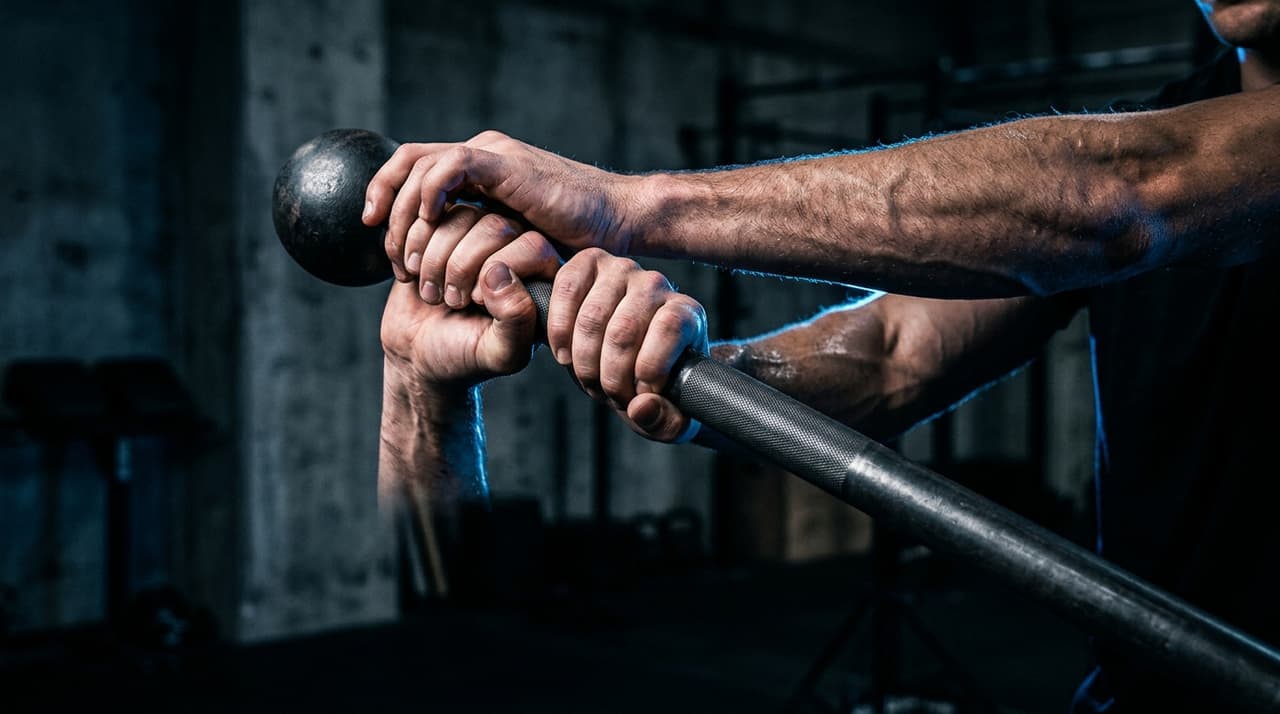
I've watched strong lifters press a heavy bell into a shape that looks vaguely overhead but is really just lumbar hyperextension with a hopeful shrug. The bar (or bell) ends up in front of the ear instead of stacked over the shoulder. Elbows flare. Ribs flare harder. The whole system leaks force, and over time it leaks joint health too.
Why the t-spine matters for pressing
To get a kettlebell truly overhead—biomechanically stacked so the joint isn't fighting gravity—you need somewhere around 180 degrees of shoulder flexion. About 60 of those degrees don't come from the shoulder at all. They come from thoracic extension and scapular upward rotation working together. A 2013 study in the Journal of Shoulder and Elbow Surgery found that restricted thoracic extension directly reduces glenohumeral range of motion during flexion, and increases subacromial contact pressure. Translation: stiff mid-back, cranky shoulder.
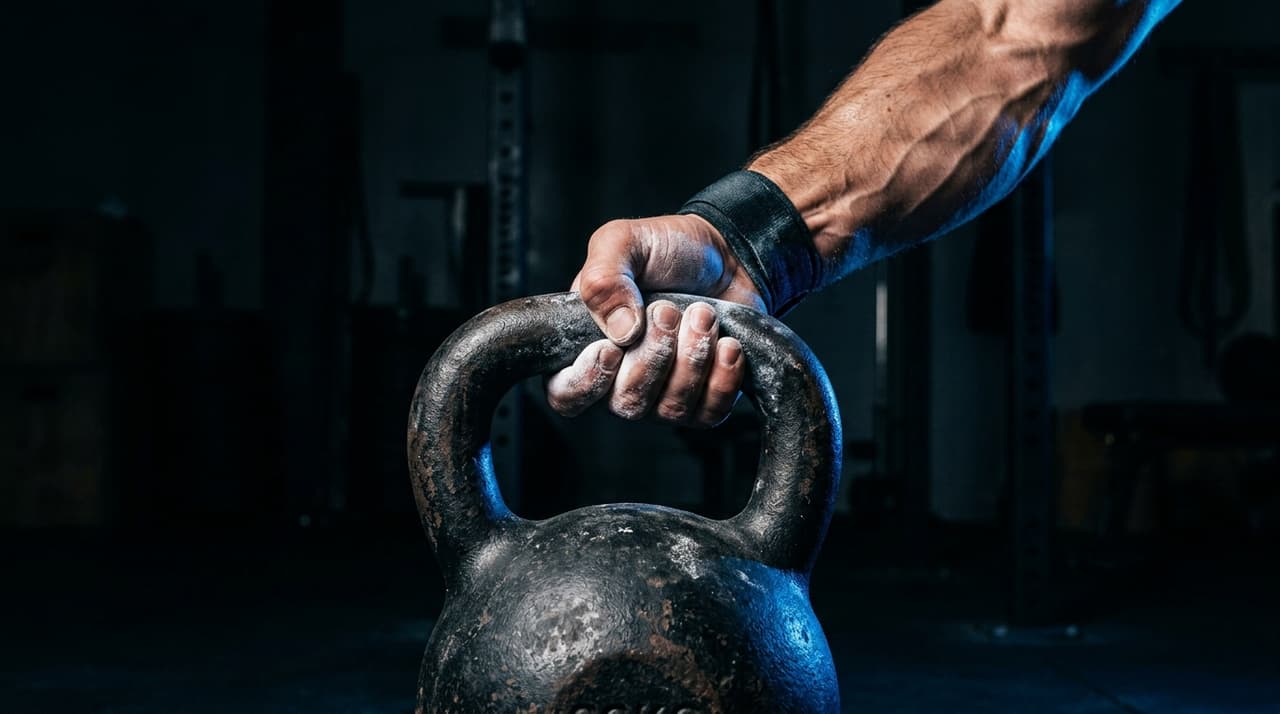
This matters more for kettlebell athletes than most people realize. The bell sits behind the wrist in the rack and overhead. That offset load demands a stacked joint. If your t-spine won't extend, your body finds the range somewhere else—usually the lumbar spine or the anterior shoulder capsule. Neither of those are structures you want to lend range to.
How to figure out if you're actually stiff
Before you spend twenty minutes a day foam rolling something that isn't the problem, test it. Sit on the floor with your back against a wall, knees bent, low back and head touching the wall. Now try to raise your arms overhead with the backs of your hands touching the wall, elbows straight.
If your hands don't reach the wall without your ribs flaring or your low back arching off, your t-spine is limiting you. If you can get there but only with a huge rib flare, same story, you're just borrowing range from your lumbar spine.
A second test I like: kneel on all fours, sit your hips back toward your heels, put one hand behind your head, and try to rotate that elbow up toward the ceiling. Most people get maybe 30 degrees. You want closer to 50. Big side-to-side differences tell you something too.
What actually works to change it
Here's what bugs me about most mobility content: it's just a list of stretches with no logic about why they'd change tissue. You stretch, you feel loose for an hour, then you're back where you started. Thoracic mobility work needs three things happening. You need to extend the segments that are stuck (usually T4 through T8), you need to rotate them, and you need to teach the surrounding musculature to hold the new range under load.
A short daily routine that hits all three:
Foam roller segmental extensions. Roller across the mid-back, hands supporting the head, ribs down. Extend over the roller for two slow breaths, then move the roller a half-inch up and repeat. Work from mid-scapula to just below the neck. Four or five positions. The key is small segments, not one giant flop backward.
Quadruped thread-the-needle with reach. From all fours, thread one arm under and across, then reverse it and reach the same arm to the ceiling, following it with your eyes. Eight reps per side, slow. This trains rotation with active control, not passive hanging.
Bench t-spine extension. Kneel in front of a bench, elbows on the surface, hands together behind your head. Sit your hips back and let your chest sink between your arms. This one's brutal if you're tight. Hold for five breaths, back off, repeat three times.
Do this before pressing sessions. Ten minutes, honestly. Not thirty.

The part almost everyone skips
Mobility you can't access under load isn't mobility. It's a party trick. After you've done your extension and rotation work, you have to teach your nervous system that the new range is safe to use while something heavy is moving.
This is where light overhead carries earn their keep. Grab a lighter bell than you'd press, get it locked out, and walk. Thirty to sixty seconds. Focus on ribs stacked over pelvis, bicep by the ear, glutes on. You're not conditioning here. You're grooving the position. The Turkish get-up does something similar because it forces you to reorganize the overhead position from multiple angles, each rep.
Half-kneeling bottoms-up presses are another one I keep coming back to. The bottoms-up grip forces the shoulder to pack correctly, and the half-kneeling stance shuts down the lumbar-extension cheat. If your t-spine is contributing what it should, this press feels solid. If it isn't, you'll feel exactly where the system breaks down.
Want to build this into a real weekly plan with timed mobility blocks, pressing intervals, and structured overhead work? FlowTimer's programmable timers let you stack a mobility warmup, a pressing EMOM, and cooldown work into a single session that runs itself.
Programming it without overdoing it
Here's the honest answer about frequency: mobility work has a low training cost and can be done nearly daily. The actual changes, though? They come from consistent, submaximal exposure paired with strength work in the new range. So ten minutes before every pressing session, plus one dedicated 20-minute mobility session per week, beats the hell out of one 60-minute session on Sunday.
A reasonable structure:
| Day | T-spine work | Pressing work |
|---|---|---|
| Mon | 10 min pre-session | Heavy press |
| Wed | 10 min pre-session | Get-ups or windmills |
| Fri | 10 min pre-session | High-rep press |
| Sat | 20 min standalone | Optional carries |
The windmill fits beautifully as a companion movement here, since it demands rotation and extension while loaded.
What changes when this works
Give it four to six weeks of honest work. You'll notice the bell settling into a spot overhead that feels almost weightless, where before it felt like you were fighting to hold it up. Your rack position gets deeper without your ribs flaring. Long sets stop wrecking your neck.
And the thing that surprised me the first time I paid real attention to my own t-spine: my pressing numbers went up without me changing the press itself. Not because I got stronger. Because the joint finally had somewhere to go.
Ready to put this into practice? FlowTimer lets you build custom interval workouts, set precise work-to-rest ratios, and train with audio cues so you can focus on your form.
Try FlowTimer Free