Breathing Patterns for Heavy Swings and Cleans: What Actually Works
Learn biomechanical breathing strategies for kettlebell swings and cleans that protect your spine and boost power output.
Most kettlebell athletes figure out breathing by accident. You grab a heavy bell, you swing it, and your body sorts something out. But that's not the same as a deliberate strategy. When the load gets heavy or the sets get long, poor breathing costs you reps, leaks power, and puts your lumbar spine at risk.
Let's fix that.
Why Breathing Matters
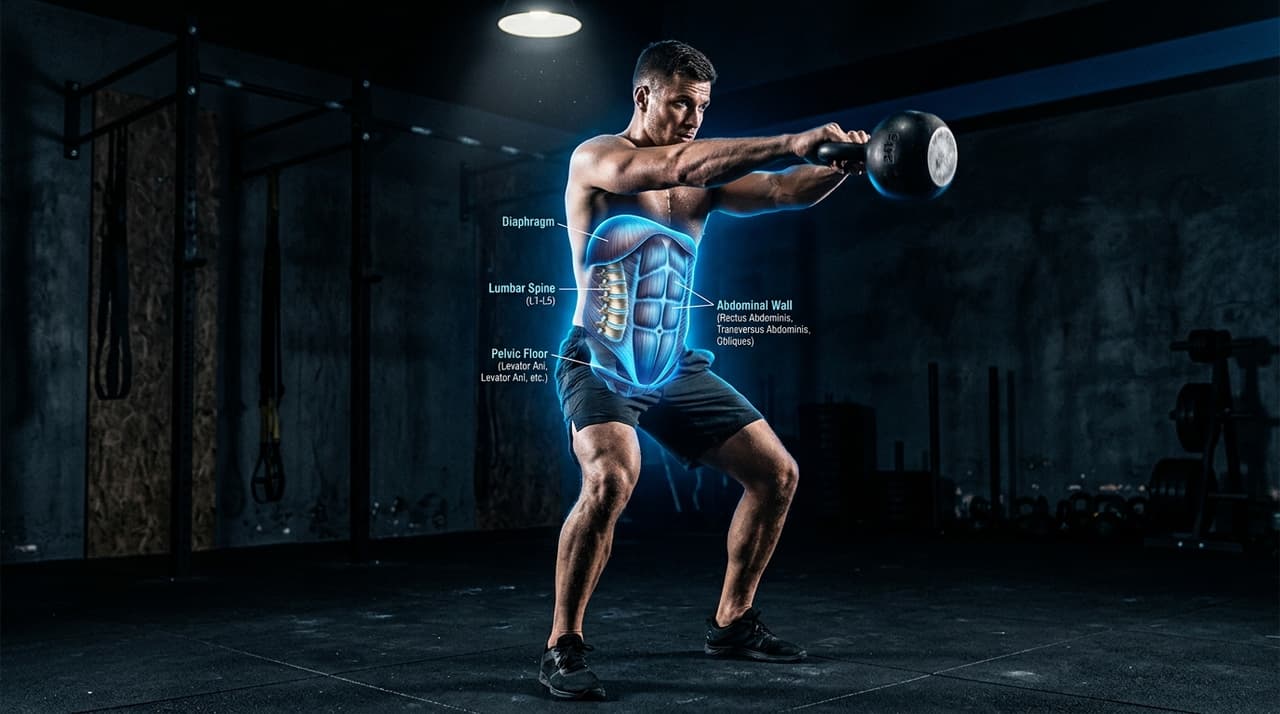
Breathing during ballistic kettlebell work isn't just about getting oxygen. It's about creating and managing intra-abdominal pressure (IAP), the internal bracing mechanism that stabilizes your spine under load.
A 2013 study published in the Journal of Strength and Conditioning Research by McGill and Marshall found that the kettlebell swing produces significant shear forces on the lumbar spine, particularly at the bottom of the swing when the hip hinge is deepest. The primary protective mechanism is a well-timed brace coordinated with the breath.
Think of your torso as a pressurized cylinder. Your diaphragm is the top, your pelvic floor is the bottom, and your abdominal wall wraps around the sides. When you inhale into your belly and brace against a closed (or partially closed) glottis, pressure inside that cylinder spikes. That pressure keeps your spine neutral when forces want to buckle it.
Get the timing wrong, and you're swinging a heavy bell with a loose core.
The Two-Breath Swing Pattern
For heavy two-hand swings (32kg and up for most men, 20kg+ for most women), the pattern that works best is what I call the two-phase breath.
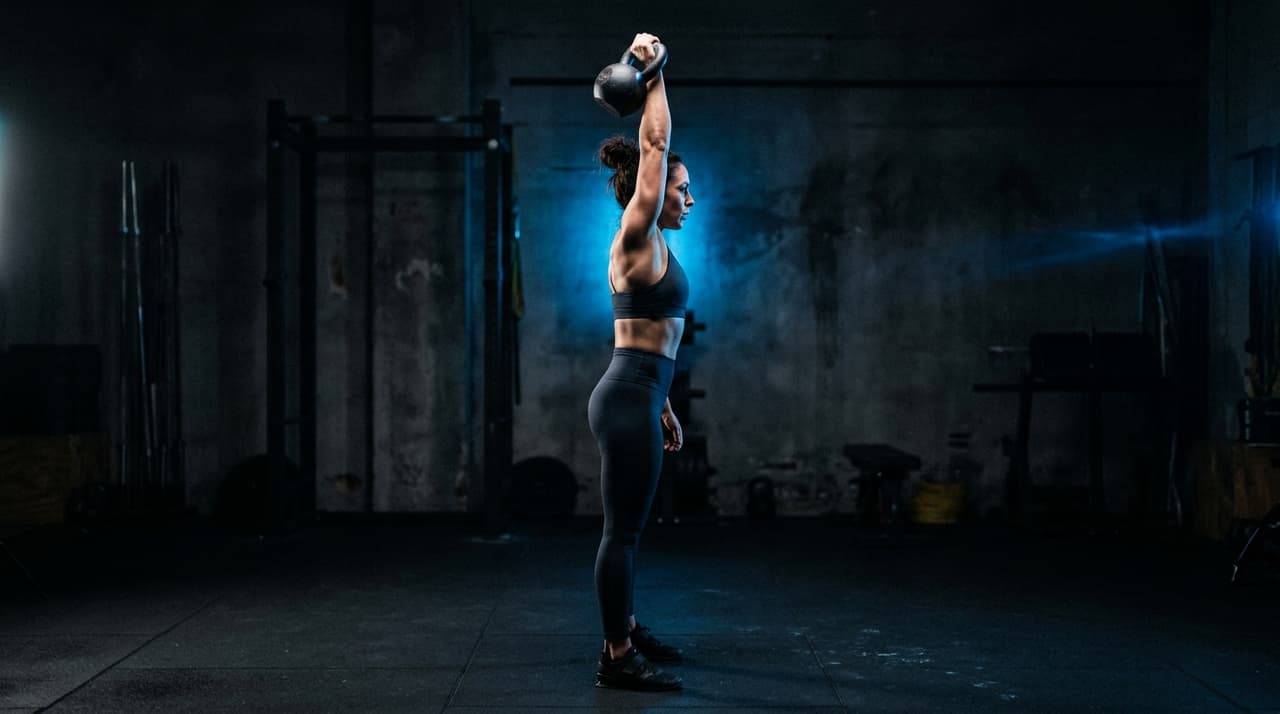
Phase 1: The inhale (backswing) As the bell passes between your legs and you load your hips, take a sharp nasal inhale. You're filling your belly, not your chest. This isn't a relaxed yoga breath. It's a quick, aggressive inflation of the abdominal cavity.
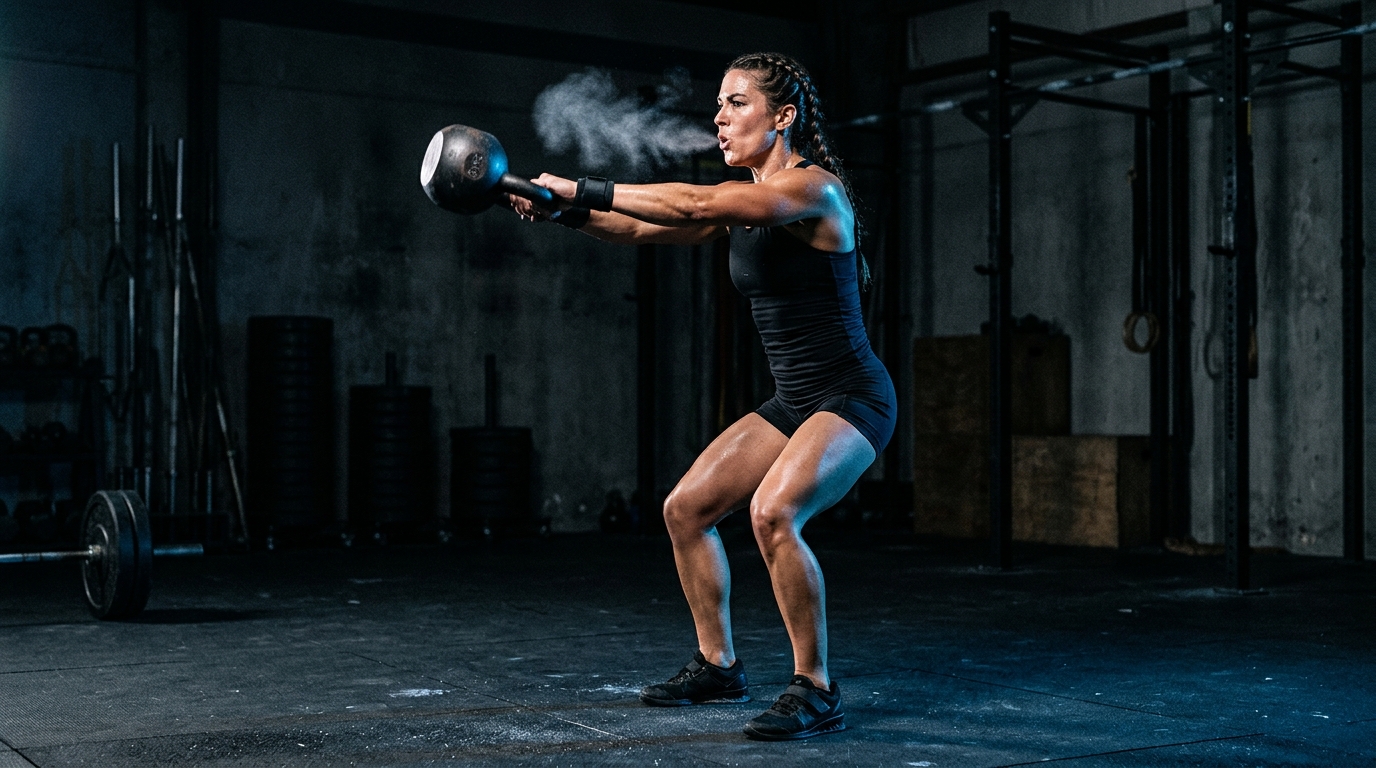
Phase 2: The exhale (hip extension through the top) As you snap your hips forward and the bell floats, exhale forcefully through pursed lips or with a sharp "tss" sound. Some people use a grunt or a "hah." The specific sound doesn't matter. What matters is that you're exhaling against resistance, maintaining partial IAP even as air leaves.
This is different from blowing all your air out. A 2019 paper by Hackett et al. in the European Journal of Applied Physiology showed that a "pressurized exhale" (breathing out against a partially closed glottis) maintained significantly higher trunk stiffness compared to a passive exhale. You stay braced while still cycling air.
| Phase | Breath Action | Cue | Purpose |
|---|---|---|---|
| Backswing (hinge loading) | Sharp nasal inhale | "Sniff into your belt" | Build IAP, brace spine |
| Hip snap to float | Pressurized exhale | "Tss" or sharp hiss | Maintain partial IAP, expel CO2 |
| Top position (brief) | Neither, hold residual brace | "Tall and tight" | Stabilize at peak |
This pattern works for sets of 10 to 20 reps without modification. Beyond that, you'll need to adjust, which we'll cover below.
Cleans: A Different Animal
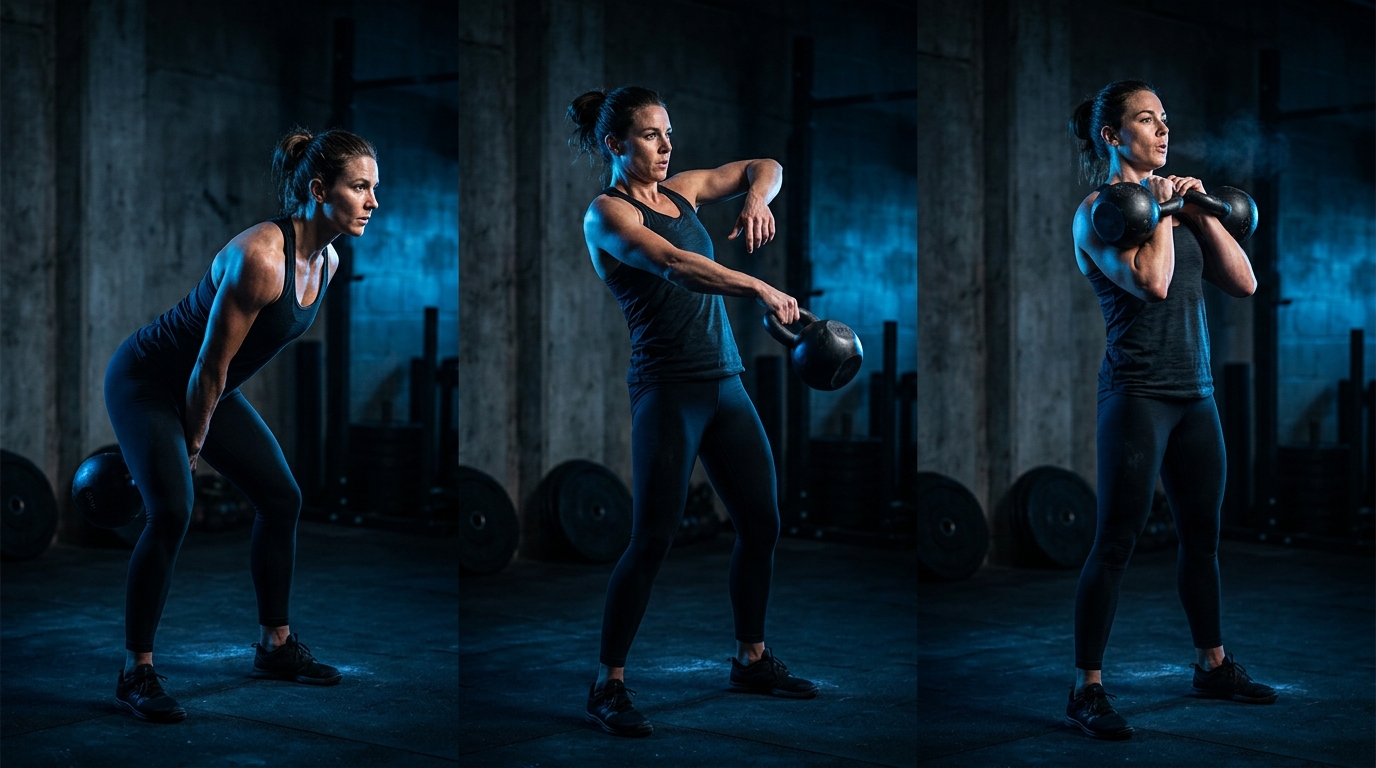
The clean adds a catch phase that the swing doesn't have. When that bell rotates around your hand and lands in the rack position, your body absorbs a deceleration force. If you're exhaling at that moment, your core pressure drops right when you need it.
The fix is a three-phase pattern:
- Inhale on the backswing, same as the swing.
- Hold the breath through the pull and rotation. This is a brief Valsalva (fully closed glottis) lasting maybe half a second. It keeps your torso rigid as the bell transitions.
- Exhale once the bell is seated in the rack. At this point the load is resting on your skeleton, not being decelerated by your muscles, so it's safe to release pressure.
For lighter cleans (16kg to 20kg), you can get away with the same two-phase pattern as swings. But once the bell gets heavy relative to your bodyweight, that brief hold through the catch makes a noticeable difference in how stable you feel.
What About Long Sets?
Girevoy Sport athletes do 10-minute sets. You can't hold aggressive bracing patterns for that long without your blood pressure spiking and your vision going dark.
For long-duration sets (anything over 2 minutes of continuous work), the strategy shifts. You need to breathe more frequently and less aggressively. Many GS athletes take two or even three breaths per rep cycle: a small inhale on the backswing, a partial exhale on the upswing, and another recovery breath at the top or in the rack.
The tradeoff is real. More breathing means less IAP per rep, which means less maximal power output. But the goal of a long set isn't maximal power per rep. It's sustainable output over time. Your breathing strategy should match your training goal.
If you're programming intervals with specific work-to-rest ratios, your breathing pattern during rest matters too. Slow, controlled nasal breathing between sets helps shift you toward parasympathetic recovery faster. A 2017 study by Ma et al. in Frontiers in Psychology found that diaphragmatic breathing significantly reduced cortisol and improved sustained attention, both relevant for performing well across multiple sets. This is where well-structured rest intervals become part of your breathing strategy, not separate from it.
If you're using FlowTimer to manage your interval work, try adding 5 to 10 seconds to your rest periods specifically for deliberate recovery breathing. You can set custom timers for this at FlowTimer, so you get an audio cue to start your breathing reset before the next set begins.
Rotational Ballistics: Where Breathing Gets Tricky
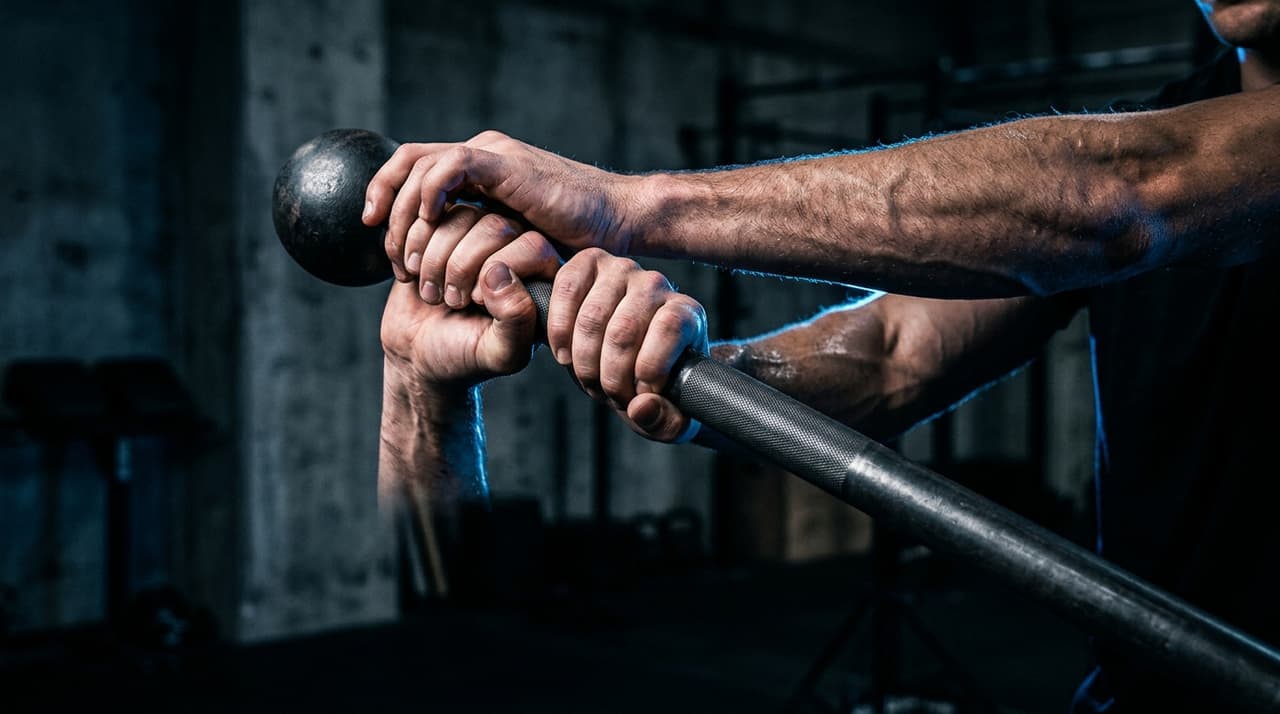
If you also train with a steel mace, you've probably noticed that rotational movements like the 360 make breathing coordination harder. The asymmetrical loading and continuous motion mean there's no clean "top" or "bottom" of the movement to anchor your breath to.
The general principle still applies: inhale when loading, exhale when expressing force. For the 360, that typically means inhaling as the mace drops behind your head (the loaded position) and exhaling as you pull it back overhead. But this takes practice. Start with lighter maces and consciously pair breath to movement before adding weight.
Practical Takeaways
Here's what to do with all of this:
For heavy swings (sets of 5 to 15): Two-phase breath. Nasal inhale on the backswing, pressurized hissing exhale on the hip snap.
For heavy cleans: Add a brief breath hold through the catch. Exhale once the bell is seated in the rack.
For long sets (2+ minutes): Use multiple smaller breaths per rep. Prioritize air exchange over maximal bracing.
For rest periods: Switch to slow nasal breathing immediately. 4 counts in, 6 to 8 counts out.
For skill practice: Spend a few sessions with a light bell (or no bell) practicing the coordination. It feels awkward at first. It won't after a week.
Breathing is the cheapest performance upgrade available to you. It doesn't require new equipment, supplements, or programming changes. It just requires attention. Put in a few focused sessions, and the pattern becomes automatic. Then you'll wonder how you ever trained without it.
Ready to put this into practice? FlowTimer lets you build custom interval workouts, set precise work-to-rest ratios, and train with audio cues so you can focus on your form.
Try FlowTimer Free