How Rest Intervals Affect Hypertrophy vs Strength in Kettlebell Training
How long should you rest between kettlebell sets? The answer depends on your goal. Here's what the research says about rest for strength vs muscle gain.
You finish a heavy set of double kettlebell front squats. You're breathing hard, your legs are flooded, and the clock is ticking. Do you go again in 60 seconds? Wait three minutes? Five?
The answer matters more than most people think. Rest intervals are one of the most powerful and most overlooked programming variables in kettlebell training. They directly influence whether your session biases toward strength, hypertrophy, or conditioning. And yet, most lifters either rest "by feel" or blindly follow a protocol without understanding what it's actually doing to their physiology.
Let's fix that.
The Physiology of Rest: What's Actually Recovering
When you finish a hard set, three things need to replenish before you can perform well again:
-
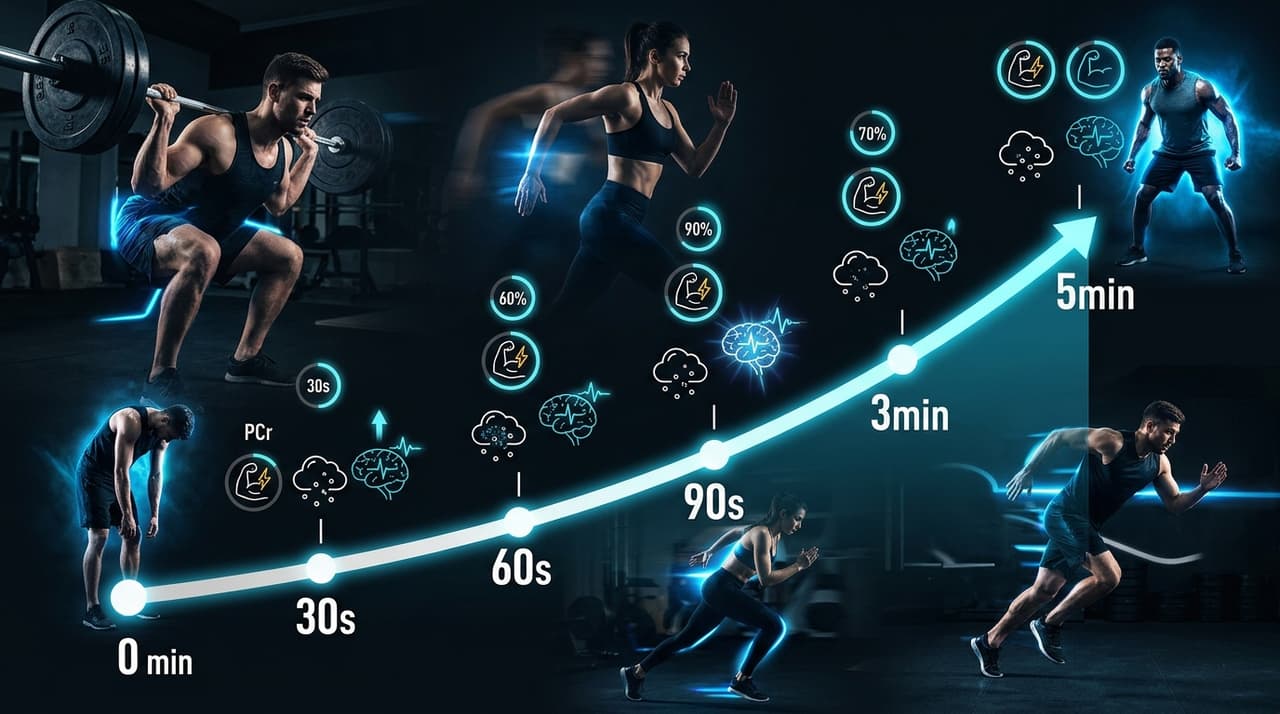
Phosphocreatine (PCr): Your muscles' primary fuel for short, intense efforts. PCr is about 50% recovered at 30 seconds, roughly 85% at 90 seconds, and nearly full at 3 minutes. A 2009 study by Harris et al. in the Journal of Sports Sciences confirmed that PCr resynthesis follows a predictable exponential curve.
-
Neural recovery: Heavy loads (think 1-5 reps with a challenging kettlebell) tax the central nervous system. Motor unit recruitment and rate coding both degrade with fatigue. This is harder to measure than PCr, but anyone who's tried to grind a heavy press on 45 seconds of rest knows it's real.
-
Metabolite clearance: Hydrogen ions, inorganic phosphate, and other byproducts accumulate during intense sets. They contribute to the burning sensation and, importantly, to the signaling cascade that may drive hypertrophy.
The balance between these three factors determines whether you're training for strength, muscle growth, or something else entirely.
For Strength: Rest Longer Than You Think
The research here is fairly clear. A 2016 meta-analysis by Grgic et al. published in the Journal of Strength and Conditioning Research found that rest intervals of 2 minutes or longer produced significantly greater strength gains compared to shorter rest periods (under 60 seconds).
Why? Strength adaptation depends on mechanical tension, which requires lifting near your maximum capacity. If you're still fatigued from the last set, you can't produce maximal force. Your reps get slower, your form degrades, and the training stimulus shifts away from strength.
For kettlebell athletes, this has practical implications:
| Goal | Suggested Rest | Rep Range | Why |
|---|---|---|---|
| Maximal strength | 3-5 minutes | 1-5 reps | Full PCr and neural recovery allows peak force output |
| Strength-skill (e.g., Turkish get-up) | 2-3 minutes | 1-3 reps per side | Quality of movement patterns matters as much as load |
| Heavy double work (squats, presses) | 2-4 minutes | 3-6 reps | Maintains rep quality across multiple sets |
If you're doing heavy double kettlebell clean and presses for sets of 3, resting 90 seconds because it "feels hard enough" is probably leaving strength gains on the table. The discomfort of short rest isn't the stimulus you're after. The load is.
For Hypertrophy: It's More Complicated Than "Short Rest"
The old bodybuilding wisdom said 60-90 seconds was the hypertrophy sweet spot because of the metabolic stress and hormone response. That story has gotten more nuanced.
A landmark 2016 study by Schoenfeld et al. in the Journal of Strength and Conditioning Research compared 1-minute vs. 3-minute rest intervals in trained men performing a full-body resistance training program. After 8 weeks, the 3-minute group saw greater increases in both strength and muscle thickness.
Wait, what? Longer rest was better for hypertrophy too?
The likely explanation: the 3-minute group could maintain higher training volumes. They completed more total reps at meaningful loads because they weren't crushed by fatigue. Volume (sets x reps x load) is the primary driver of hypertrophy, assuming sufficient mechanical tension.
But this doesn't mean short rest is useless for muscle growth. A 2021 review by Lasevicius et al. in Sports Medicine noted that when total volume is equated, rest interval length has a smaller effect on hypertrophy. The metabolic stress from shorter rest periods may provide an additional hypertrophic stimulus, particularly through cell swelling and metabolite accumulation.
The practical takeaway for kettlebell lifters: if you can maintain your target reps and load quality, moderate rest intervals (90-120 seconds) can work well for hypertrophy. If your reps start dropping off significantly, you're better off resting longer and getting the volume in.
Where Kettlebell Training Gets Interesting
Here's what makes this conversation different for kettlebell athletes compared to barbell lifters: many of our most popular training protocols have rest intervals baked into the format.
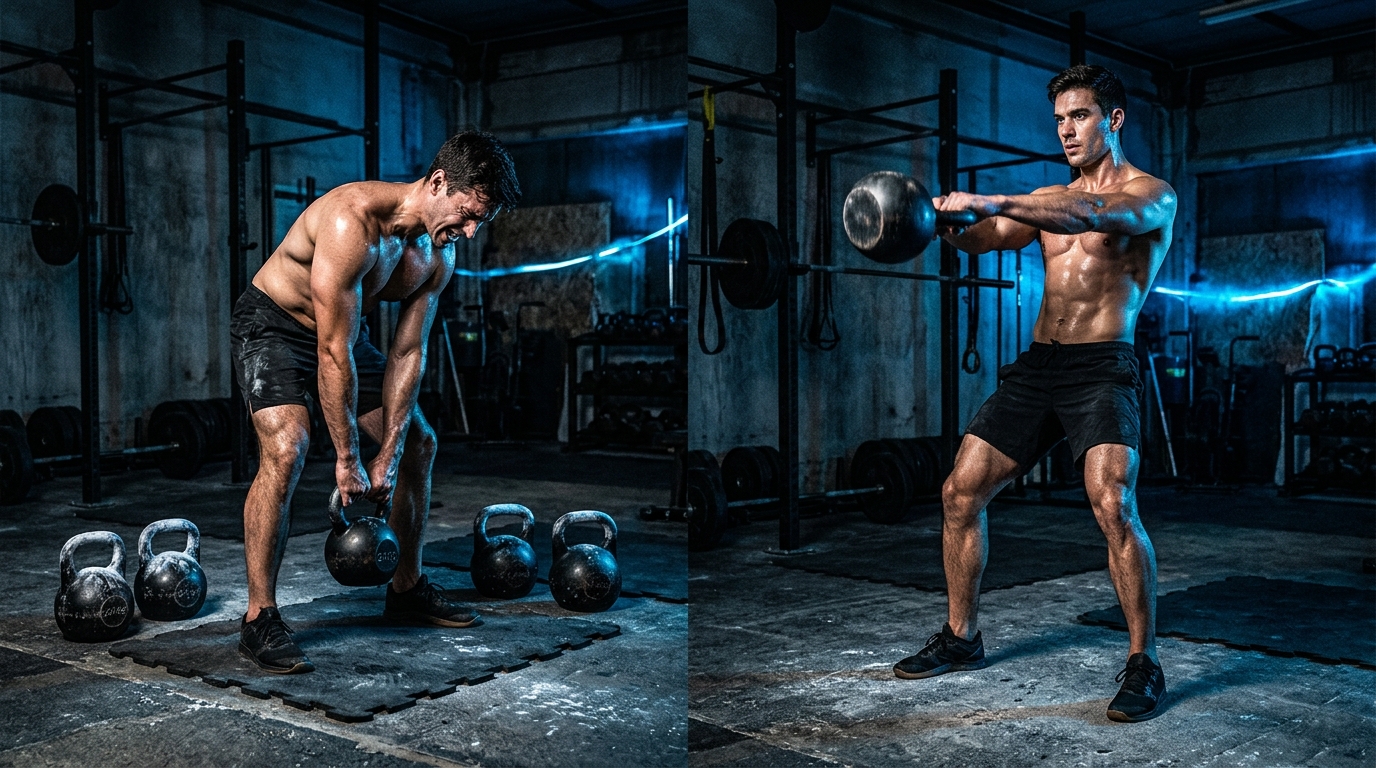
EMOMs create a dynamic rest situation. If you're doing 5 heavy swings every minute on the minute, your rest period is whatever time remains after completing the set. As fatigue accumulates, your sets take longer, and your rest shrinks. This is an elegant auto-regulation mechanism, but it means your rest intervals are constantly shifting between strength-favorable and hypertrophy-favorable ranges depending on the load and rep scheme.
AMRAPs, on the other hand, typically involve self-selected rest that gets shorter as the clock pressures you. They tend to bias heavily toward metabolic conditioning and muscular endurance.
Understanding these dynamics lets you choose (or design) the right protocol for your goal. A heavy EMOM with 3 reps of double kettlebell front squats every 2 minutes is a very different stimulus than 10 swings every minute.
If you're using timed protocols like these, FlowTimer's interval timers let you set precise work and rest periods, so you're not guessing and can track how your performance changes across sessions. That data turns "training by feel" into training by evidence.
Practical Programming Guidelines
Here's how to apply all of this to your own training:
Training for strength (heavy grinds, low reps): Rest 3-5 minutes between sets. Yes, it feels like a lot. Bring a book. Your nervous system and PCr stores will thank you, and your numbers will reflect it. This applies to heavy presses, front squats, and movements like the Turkish get-up where movement quality is paramount.
Training for hypertrophy (moderate loads, moderate to high reps): Start with 2-minute rest intervals. Monitor your rep quality across sets. If you're hitting your target reps in sets 1-2 but dropping 20-30% by sets 4-5, add 30 seconds of rest. Total volume matters more than the burn.
Training for conditioning (swings, snatches, complexes): Shorter rest intervals (30-90 seconds) or timed protocols like EMOMs and Tabatas are appropriate here. The goal is to sustain output under metabolic stress, so fatigue is part of the intended stimulus.
Mixed sessions: Do your strength work first with full rest, then shift to hypertrophy or conditioning work with shorter rest. This is a classic concurrent training approach, and it works because heavy, neurally-demanding work suffers more from accumulated fatigue than higher-rep metabolic work.
The One Rule That Matters Most
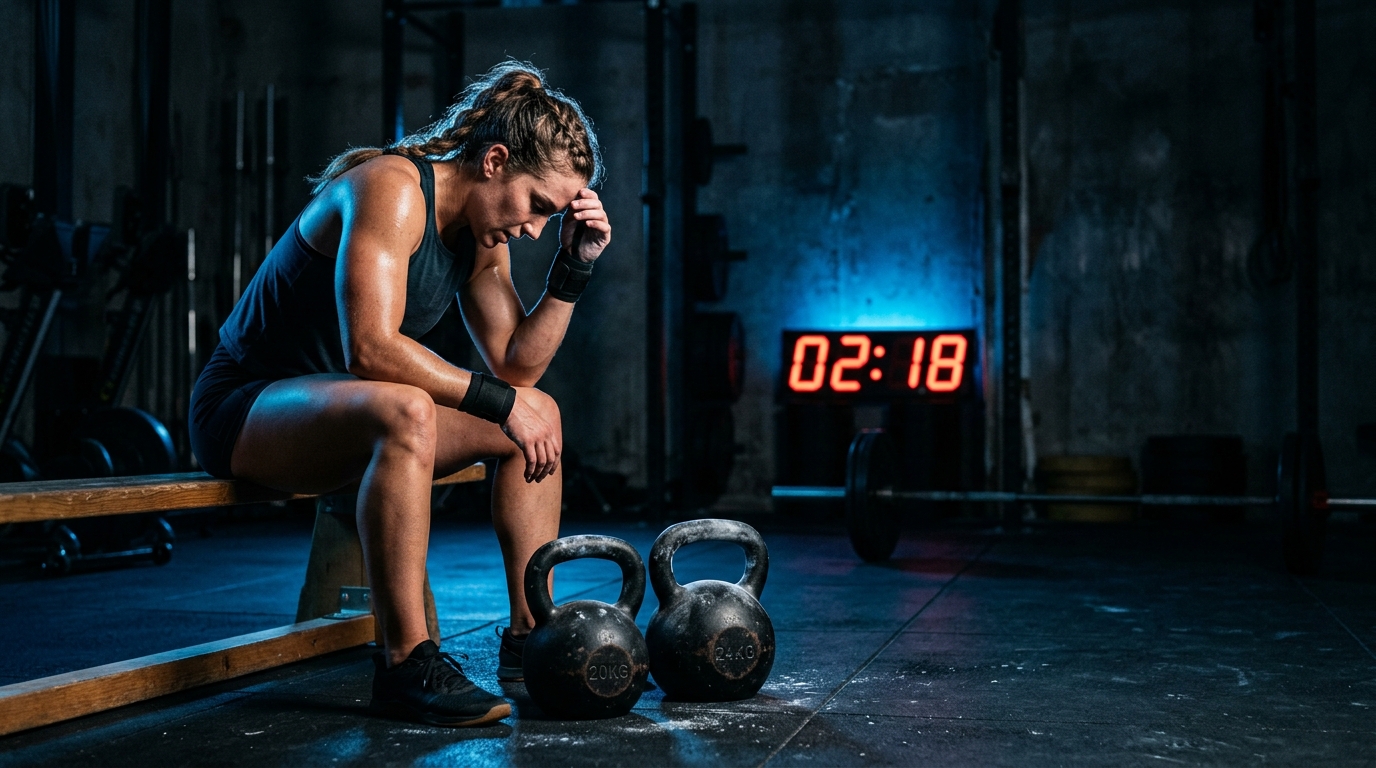
Rest intervals should serve your training goal, not your ego. Resting 60 seconds between heavy sets of 3 doesn't make you tough. It makes you weaker on the next set. Resting 5 minutes between sets of 15 swings doesn't make you more recovered. It makes you less conditioned.
Match the rest to the purpose. Track it. Adjust it over time as your fitness changes.
Most kettlebell athletes find that simply being intentional about rest periods (rather than scrolling their phone for an undefined period) leads to noticeably better results within 4-6 weeks. It's one of those small variables that, when controlled, makes everything else in your program work harder.
Time your rest. Train with purpose.
Ready to put this into practice? FlowTimer lets you build custom interval workouts, set precise work-to-rest ratios, and train with audio cues so you can focus on your form.
Try FlowTimer Free