Wrist conditioning for steel mace training: build joints that don't quit
Your wrists are the weak link in steel mace training. Here's how to condition them so they can handle heavier loads and longer sessions.
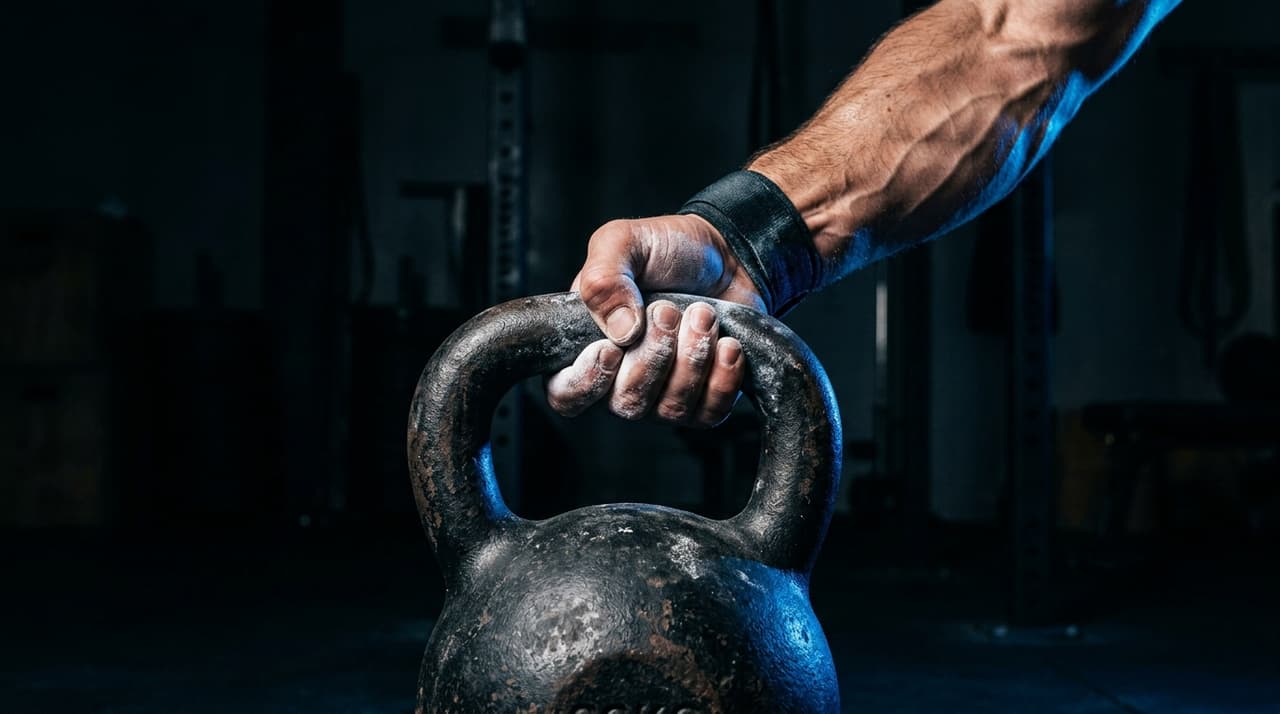
If you've spent any real time under a steel mace, you already know the truth: your shoulders and lats are rarely what fail first. It's your wrists. That deep ache along the back of the forearm after a set of 360s. The wobble at the top of a 10-to-2 when the mace tries to twist out of your hands. The next-morning stiffness that makes turning a doorknob feel like a bench PR.
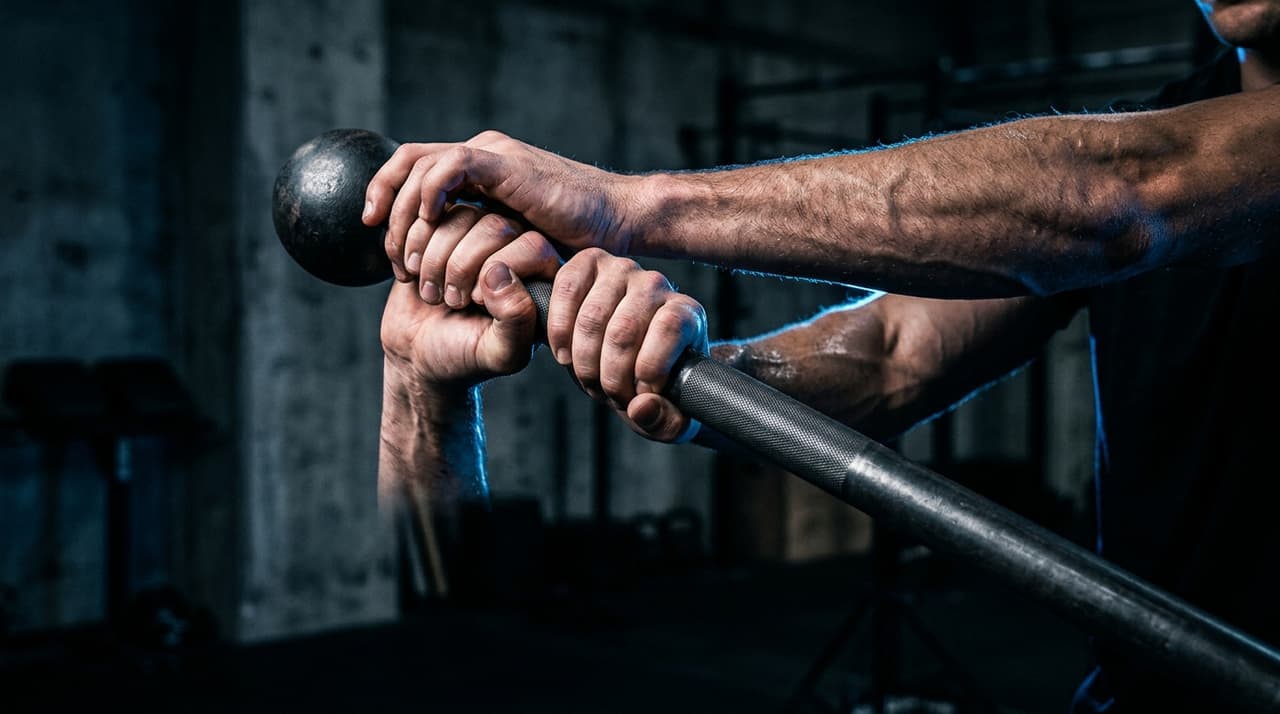
Mace training loads the wrist in a way almost nothing else does. Long lever, offset weight, rotational torque, and you're asked to decelerate all of it while keeping the joint stacked. That's a big ask for a joint most people have never trained directly.
Let's fix that.
Why the mace punishes wrists
A barbell distributes load through your palm and lets your wrist sit neutral. A kettlebell hangs from the fingers and rotates around a fixed handle. The mace does something different: the weight sits 20 to 30 inches away from your hands, so every degree of wrist flexion or extension gets multiplied by that lever arm.
When a 10-pound mace swings behind your head, the torque at your wrist isn't 10 pounds. Depending on the angle and speed, it can peak at three or four times that. Your flexor and extensor tendons are absorbing that load through a joint made of eight small carpal bones held together mostly by ligament.
This is why lifters who can press a 32kg kettlebell overhead for reps will struggle with a 15-pound mace 360. Different demand entirely.
The two failure modes
Wrist issues in mace training usually come from one of two places.
The first is acute grip failure. Your fingers open, the mace shifts, and now your wrist has to catch a lever that's already moving in the wrong direction. This is a grip endurance problem, not really a wrist problem, but the wrist pays the bill.
The second is tendon overload. You push volume too fast, the extensor carpi radialis and the flexors around the medial epicondyle get inflamed, and you're looking at what's basically self-inflicted tennis elbow or golfer's elbow. This one sneaks up. You feel fine during the session and wake up sore two days later.
Both are trainable. Both are preventable.
The conditioning framework
I think about wrist work in three buckets: isometric strength, dynamic control, and tissue tolerance. You want all three, and you build them in that order.
Isometric strength is your baseline. Can the wrist hold position under load without collapsing? Farmer carries with a mace held vertically at your side, pinch grips on plates, and simple wrist-neutral holds with a light mace extended in front of you all build this. Two or three sets of 20 to 45 seconds, a few times a week, is enough to start.
Dynamic control is the ability to move through range under load. This is where wrist circles with a light mace, controlled pronation and supination drills, and slow tempo 360s live. The tempo part matters. If you can't do a 360 with a 5-second eccentric, you don't own the position, you're just riding momentum.
Tissue tolerance is what lets you handle real volume. The forearm tendons respond well to slow, heavy-ish loading. Think Chinese-style wrist rollers, offset dumbbell rotations, or Zottman curls done deliberately. This is built through progressive exposure, not through any single magic exercise, and honestly it's the piece most people skip entirely because it's boring.
A weekly template that actually works
Here's what I'd run for someone doing mace work two or three times a week and wanting to bulletproof their wrists without adding a whole extra session.
| Day | Wrist work | Duration |
|---|---|---|
| Pre-mace warmup | Wrist circles, prayer stretch, light mace figure-8s | 3-5 min |
| Post-mace finisher | Wrist roller or offset DB rotations, 2-3 sets | 5 min |
| Off-day maintenance | Rice bucket work or band pronation/supination | 5-8 min |
That's it. Fifteen to twenty minutes of dedicated wrist work per week. The people who get hurt aren't the ones doing too much of this. They're the ones doing none of it and jumping into 15-pound 360s because a YouTube video made it look easy.
If you're tracking your mace sessions on a timer anyway, set up a dedicated wrist prep block at the front end. Three minutes, non-negotiable. Consistency beats intensity here every single time.
The progression mistake almost everyone makes
People jump mace weight before they earn it. They see someone doing 360s with a 20-pounder and figure they should be there in a month. But the shoulders and lats might be ready long before the wrists are.
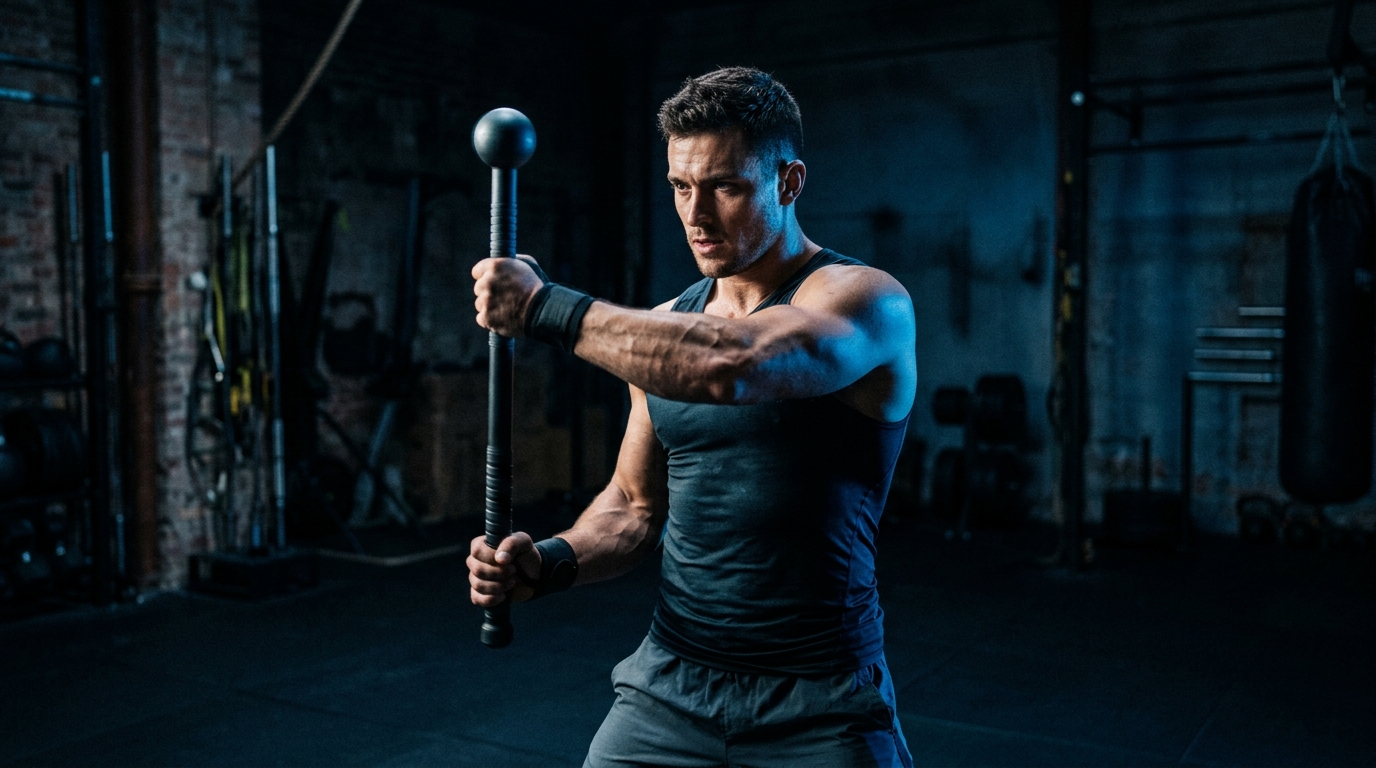
A better progression: stay at a given weight until you can do the target volume with a controlled tempo and zero wrist wobble at the bottom position. That means the mace stops crisply behind your back, doesn't drift, doesn't twist. If you're compensating with a whippy stop, the wrist is absorbing that impact, and you're accumulating damage you won't feel for weeks.
A useful test: can you pause for one full second at the bottom of the 360, mace hanging still behind your back, before starting the next rep? If not, the weight is either too heavy or your conditioning isn't there yet. Both fixable, neither ignorable.
This ties back to something I've written about before, why autoregulation beats fixed programs. Your wrists don't care about the program you wrote on Sunday. They care about how they feel Wednesday morning.
The recovery piece nobody talks about
Wrist tendons have poor blood supply. They recover slowly. If you're training mace three days in a row and your wrists feel cranky by day two, that's not something you push through. That's data.
Heat before, ice after if there's swelling, and honestly, sometimes just taking two days off does more than any prehab drill. Tendons remodel on a timescale of weeks, not hours. Respect that.
Build the wrists, and the mace becomes a tool you can use for decades. Ignore them, and you'll be that person on Reddit asking why their forearms hurt every time they train. Don't be that person.
Ready to put this into practice? FlowTimer lets you build custom interval workouts, set precise work-to-rest ratios, and train with audio cues so you can focus on your form.
Try FlowTimer Free