
Why autoregulation beats fixed programs (and how to start)
Fixed programs ignore how you actually feel. Autoregulation matches training to your readiness, and it works better for long-term progress.
I used to be religious about my program. If it said five sets of ten heavy swings on Tuesday, I did five sets of ten heavy swings on Tuesday. Didn't matter that I'd slept four hours, or that my lower back felt like hot concrete, or that I'd spent the morning hauling furniture for a friend. The spreadsheet said go, so I went.
And honestly, sometimes I got hurt.
Not catastrophically. Just the slow, accumulating kind of hurt. A cranky shoulder that wouldn't settle down. A grip that gave out two sets early and left me white-knuckling through the rest. I thought I was being disciplined. I was actually just being rigid, and there's a real difference between the two.
The problem with "just follow the program"
Fixed programs assume your body shows up the same way every session. It doesn't. Your readiness to train fluctuates based on sleep, stress, nutrition, what you did yesterday, how hydrated you are, whether your kid kept you up at 3 AM, and about forty other variables you can't control.
A 2017 study published in the Journal of Strength and Conditioning Research by Helms et al. compared autoregulated training (using RPE, or Rate of Perceived Exertion) against a fixed percentage-based program in resistance-trained men. Both groups made strength gains, but the autoregulated group achieved them with less fatigue accumulation and better velocity maintenance across sets. They got similar results while beating themselves up less. That's not a small thing over months and years of training.
I keep coming back to this idea: the best program is one that meets you where you are today, not where a spreadsheet assumed you'd be six weeks ago when you wrote it.
What autoregulation actually means
Autoregulation isn't "do whatever you feel like." That's a common misread, and it's wrong. It's a structured framework for adjusting training variables (load, volume, rest, exercise selection) based on your real-time readiness. You still have a plan. You just give yourself permission to deviate from the plan based on honest feedback from your body.
In practice, it looks like this:
You walk into your garage gym planning to do heavy double cleans with the 28s. You grab the bells, do a warm-up set, and they feel like they're filled with cement. On a normal day these move well. Today they don't. So instead of grinding through five ugly sets, you drop to the 24s and focus on crisp, powerful reps. Or you keep the 28s but cut from five sets to three. Or you shift to single-arm work where the load demand is different.
You still trained. You still progressed the session in a meaningful direction. You just didn't force your Tuesday body to do your Saturday workout.
Two simple tools to get started
You don't need heart rate variability monitors or velocity-based training systems to autoregulate. Those tools are great if you have them, but two low-tech approaches work surprisingly well for kettlebell and steel mace athletes.
The RPE check. Before your working sets, do one or two warm-up sets at moderate load and honestly rate them on a 1-to-10 scale. A true RPE 6 means you could have done four more reps. If your planned working weight feels like RPE 8 on the warm-up, that's data. Respect it. The research from Helms and others consistently shows that training at RPE 7-8 on most sessions drives progress without digging a recovery hole you can't climb out of.
The first-set rule. Complete your first working set as planned. If the quality is there (good hip hinge, crisp lockout, breathing is on point), proceed as written. If form deteriorates or you're compensating in ways you can feel, adjust downward. This is especially useful for ballistic work like swings and cleans where sloppy reps under fatigue carry real injury risk.
I find the first-set rule works particularly well with timed sets and interval work, because the clock gives you an objective reference point. If you normally get 12 clean reps in a 30-second work window and today you're struggling at 8, that gap tells you something.
The mindset shift that makes this work
Here's the hard part. Autoregulation requires you to be honest with yourself, and honest in both directions.
Some days you need to back off, and the ego won't like it. You had "heavy day" written on the whiteboard and now you're swinging the 20 instead of the 28. That can feel like failure if your identity is wrapped up in always pushing harder.
But the flip side is just as common, and people talk about it less. Some days you walk in feeling flat and your warm-up set moves like air. The RPE says you have more in the tank than you expected. Autoregulation means going up on those days, not just down. If you always use "listening to my body" as permission to coast, you're not autoregulating. You're sandbagging.
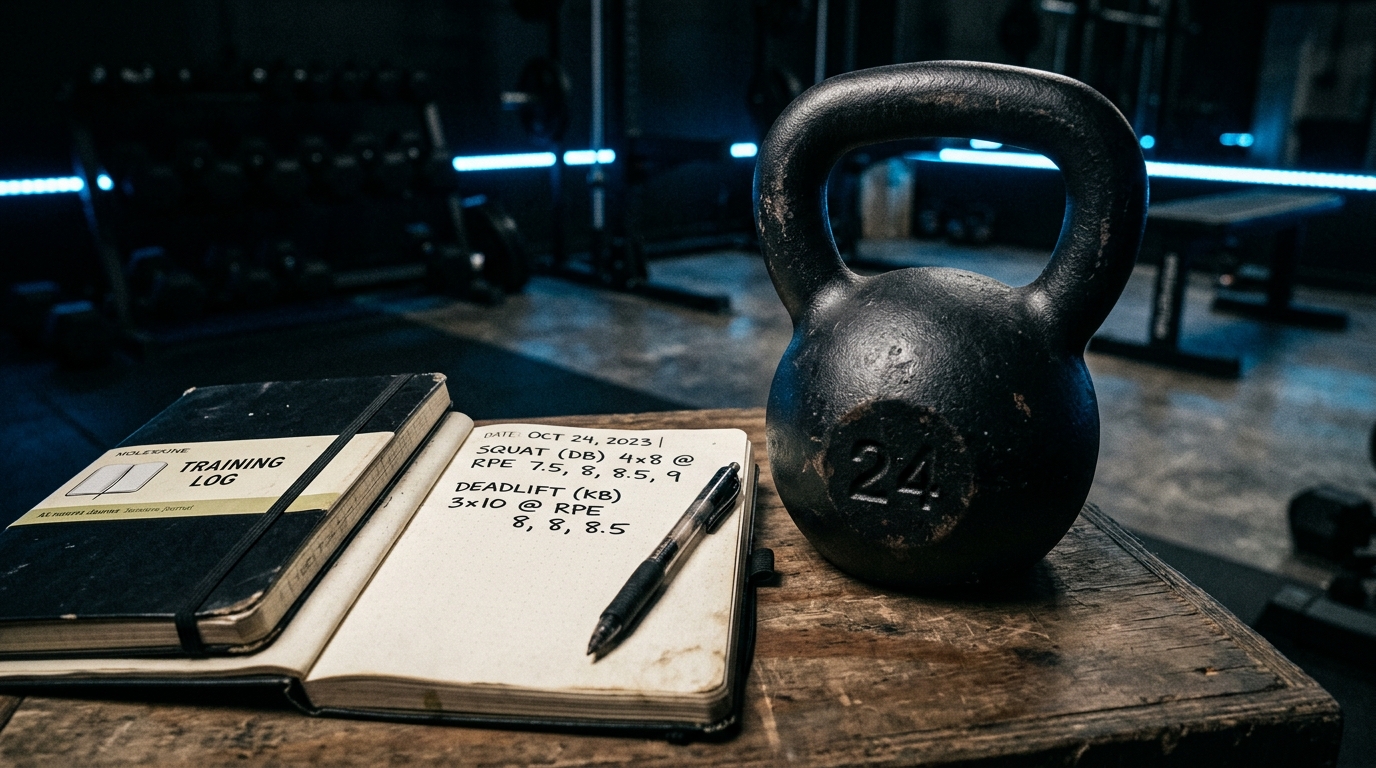
The honesty requirement is what separates autoregulation from just winging it. You need some kind of feedback loop. A training journal works well for this, even a bare-bones one: date, exercise, load, sets, reps, RPE, one sentence about how it felt. Over a few weeks, patterns emerge. You'll notice that your Monday sessions after weekend recovery are consistently strong, or that your Thursday evening sessions tank when work stress peaks. That data informs better auto-regulation decisions going forward.
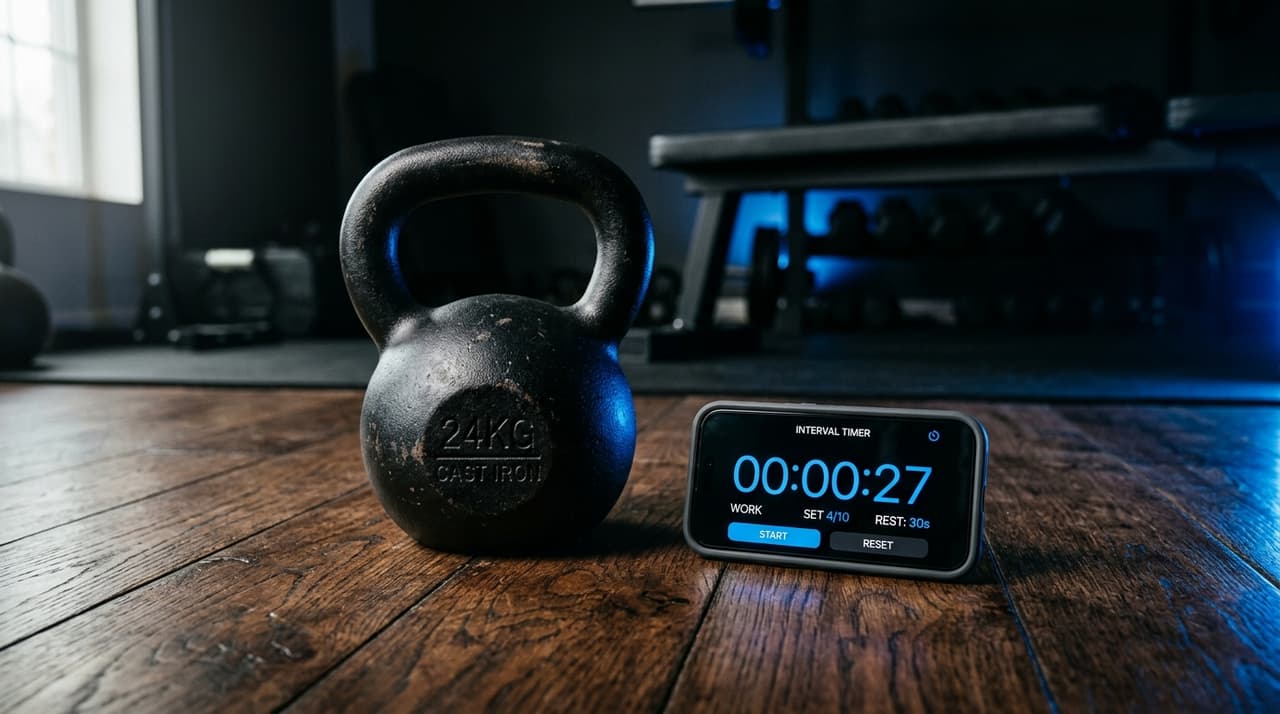
If you're using timed intervals for your training (and if you train with kettlebells or steel mace, you probably should be), an app like FlowTimer gives you a built-in structure to autoregulate within. Set your intervals, then adjust the load or reps per round based on how you're actually performing. The timer provides the framework; you provide the honest assessment.
This doesn't mean programs are useless
I want to be clear about something because I think nuance matters here. Programs are good. Periodization is good. Having a plan for the training week is much better than walking into the gym and flipping a coin. The question isn't program vs. no program. It's rigid execution vs. flexible execution.
Think of your program as a route on a map. Autoregulation is the ability to take a detour when there's a road closure without abandoning the trip entirely. You're still heading to the same destination (stronger press, better conditioning, heavier snatch). You just don't white-knuckle it through every mile.
A 2021 paper by Shattock and Tee in Sports Medicine reviewed autoregulation methods across multiple training contexts and concluded that autoregulated approaches produced equivalent or superior strength outcomes compared to predetermined programs, with the added benefit of reduced overreaching. Equivalent or superior. With less burnout. That combination is hard to argue with.

You don't have to flip the whole script at once
If you've been following fixed programs for years, going fully autoregulated overnight will feel like stepping off a cliff. Don't do that. Instead, pick one variable to make flexible this week. Maybe it's load: you allow yourself to go up or down one bell size based on your warm-up RPE. Everything else stays fixed. Get comfortable with that single adjustment before you start playing with volume or exercise selection.
The goal isn't to become a free-jazz improviser in the gym. It's to train hard on the days your body can handle hard, and train smart on the days it can't. Over a career of training, that distinction matters more than any single workout ever will.
Your body isn't a machine that produces the same output every session. Mine sure isn't. Stop treating it like one, and you might be surprised how much more consistent your training actually becomes.
Ready to put this into practice? FlowTimer lets you build custom interval workouts, set precise work-to-rest ratios, and train with audio cues so you can focus on your form.
Try FlowTimer Free