Flow State in Timed Training: How Intervals Unlock Your Best Focus
Timed intervals can trigger flow state during kettlebell and mace training. Here's the science behind it and how to set up your sessions.
You've probably had one of those sessions where everything clicks. The bell feels light, your timing is sharp, and you finish a set before you even realize you started counting. Twenty minutes vanish. You feel calm and energized at the same time.
That's flow state. And it's not random luck. It's a measurable neurological phenomenon, one that timed training is uniquely suited to trigger.
What Flow State Actually Is
Mihaly Csikszentmihalyi coined the term in 1990, and research has expanded significantly since then. Flow is characterized by complete absorption in a task, a loss of self-consciousness, and a distorted sense of time. It's not mystical. It's a specific pattern of brain activity.
During flow, the prefrontal cortex (the part responsible for self-monitoring and inner criticism) temporarily quiets down. Neuroscientists call this transient hypofrontality. A 2021 review published in Neuroscience & Biobehavioral Reviews confirmed that flow correlates with reduced activity in the default mode network, the brain region responsible for mind-wandering and self-referential thought. Basically, the voice that says "this is heavy" or "I look weird" goes quiet.
At the same time, neurochemicals accumulate. Norepinephrine sharpens focus. Dopamine enhances pattern recognition. Endorphins reduce pain perception. Anandamide increases lateral thinking. The result is a state where you perform better while feeling less effort.
The obvious question: how do you get there on purpose?
The Conditions That Trigger Flow
Researcher Steven Kotler, director of the Flow Research Collective, has identified several environmental and psychological triggers for flow. Three of them connect directly to timed interval training:
Clear goals with immediate feedback. When a timer is running, the goal is unmistakable. Complete the work. Hit the reps. Maintain form until the beep. There's no ambiguity. Every rep gives you feedback: did the bell float at the top of the clean? Did the mace path stay smooth through the 360? You know instantly.
The challenge-skill balance. Flow lives in a narrow band. The task needs to be hard enough to demand full attention but not so hard that anxiety takes over. Kotler's research suggests the sweet spot is about 4% beyond your current skill level. Timed sets let you dial this in precisely by adjusting load, interval length, or rest periods.
Concentration on a limited field. A countdown timer narrows your world. You're not thinking about the rest of your workout. You're not thinking about dinner. You're inside this interval, this rep, this breath.
Why Kettlebell and Mace Training Are Perfect for Flow
Not all exercise triggers flow equally. Running on a treadmill rarely does, because the movement is too repetitive and too easy to zone out from. High-skill, rhythmic activities with real consequences for losing focus work best.
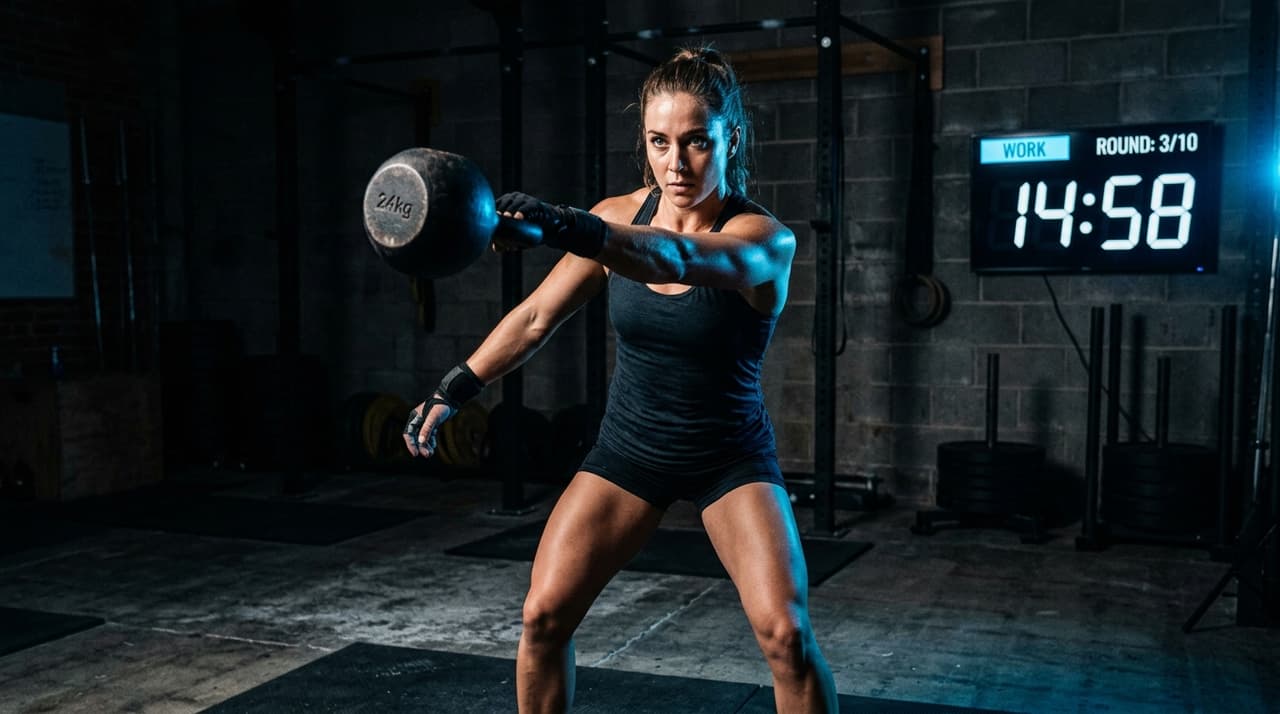
Kettlebell ballistics fit this perfectly. A heavy swing demands hip timing, grip engagement, and coordinated breathing on every single rep. Lose focus for one rep and the bell pulls you forward. The stakes are low enough to avoid fear but high enough to demand attention.
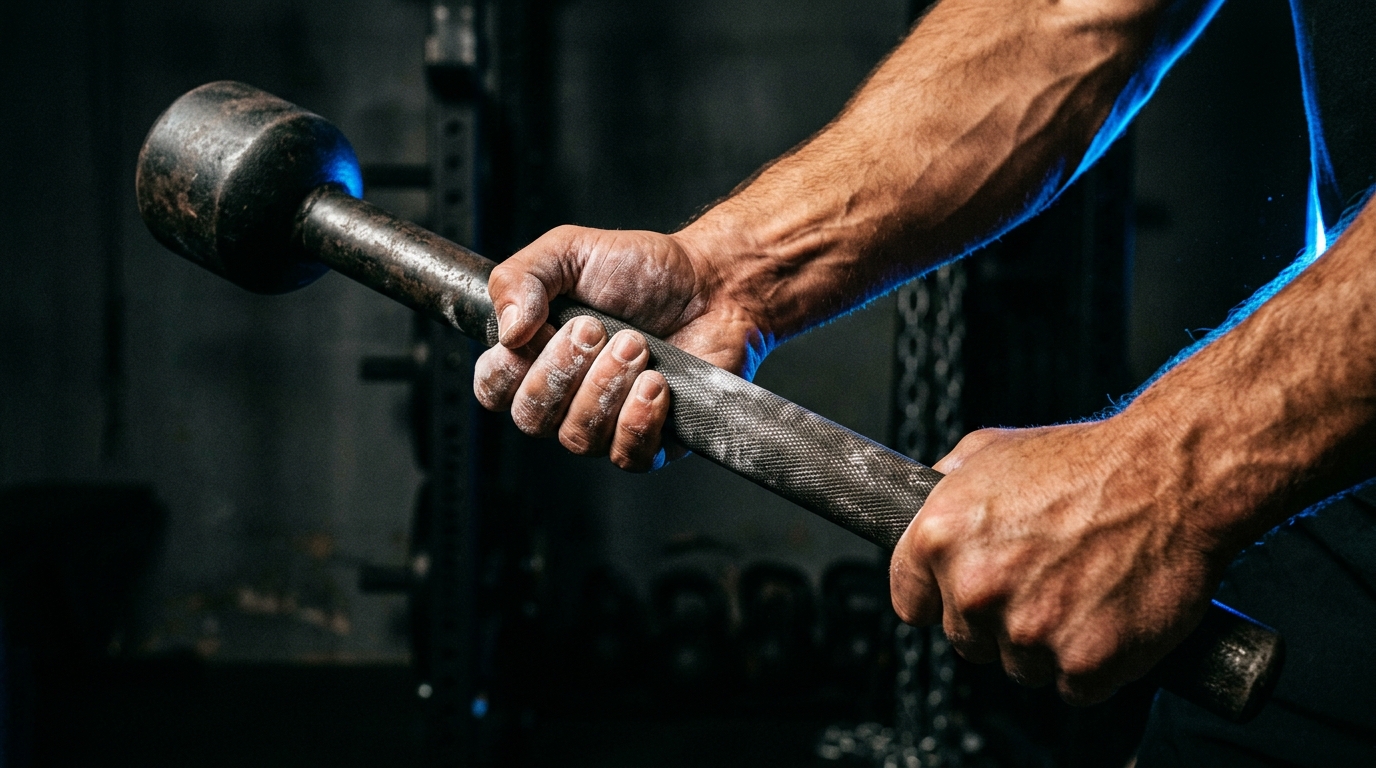
Steel mace work might be even better. The offset load creates constant rotational feedback. Your body has to solve a slightly different stabilization problem with each degree of the arc. That's the kind of rich sensory input that keeps the brain locked in.
There's also the rhythm factor. A 2018 study in Frontiers in Psychology found that repetitive, rhythmic movement patterns trigger flow reliably, especially when paired with controlled breathing. Sound like any training tool you know?
How to Structure Sessions for Flow
You can't force flow, but you can set up the conditions and let it arrive. Here's what the research and practical experience suggest:
Pick the right interval length. Too short (under 20 seconds) and you never settle in. Too long (over 5 minutes at high intensity) and fatigue disrupts focus. For most kettlebell work, intervals of 30 seconds to 3 minutes work well. For mace flows and complexes, 2 to 4 minutes is better.
Match load to the interval. This is where most people get it wrong. If you're chasing flow, the load should let you maintain crisp technique for the entire interval. Going too heavy introduces survival mode, not flow. Going too light lets your mind wander. The right weight is the one where you have to pay attention but don't have to fight.
| Training Style | Interval Range | Load Selection | Rest Ratio |
|---|---|---|---|
| Heavy swings/cleans | 30-60 sec | 70-80% effort | 1:1 to 1:2 |
| Mace 360s/flows | 2-4 min | Moderate, technique-focused | 1:1 |
| Kettlebell complexes | 1-3 min | 60-70% effort | 1:1 to 1:1.5 |
| Long cycle (GS style) | 3-5 min | Competition pace | 1:1 |
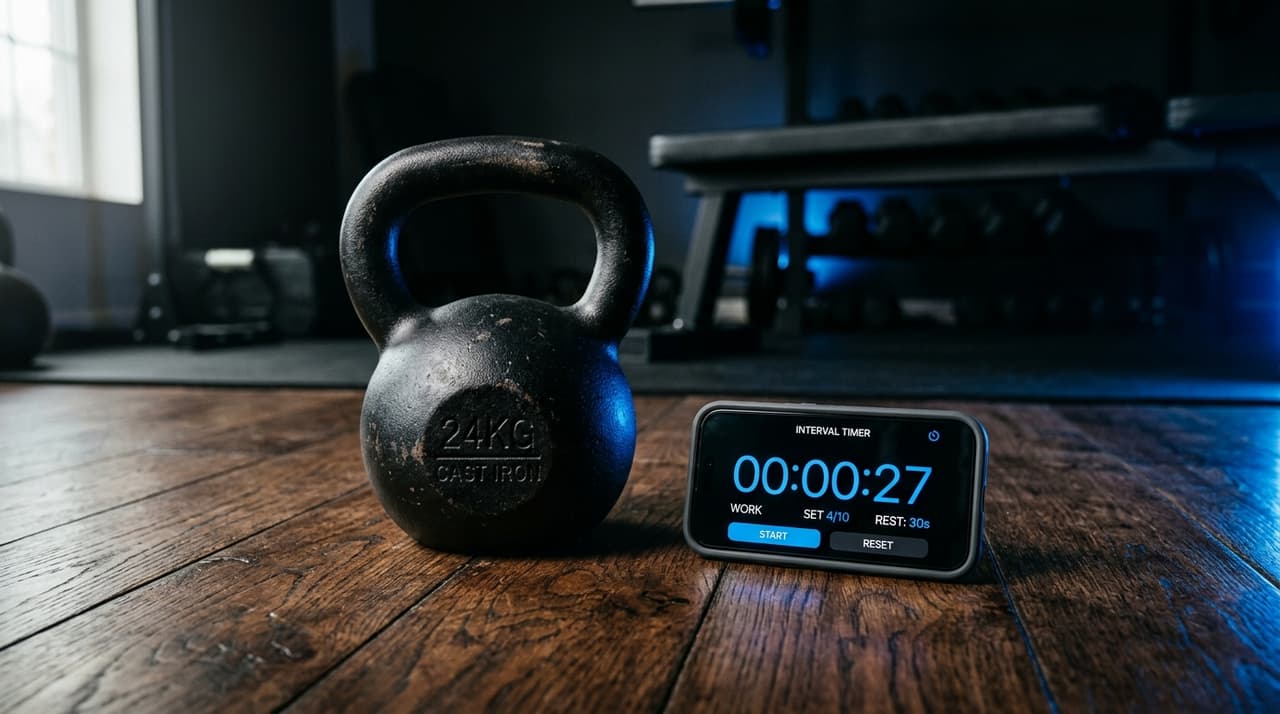
Minimize decisions during the session. Program your intervals and rest periods before you start. Every time you pause to think about what's next, you pull yourself out of the zone. This is one of the biggest practical advantages of training with a timer app. The timer tells you when to work and when to rest. You just move.
If you're looking for a timer that handles complex interval structures without forcing you to stop and fiddle with settings mid-session, FlowTimer was built exactly for this. Set up your work and rest periods once, hit start, and let the session carry you.
Build a pre-session routine. Kotler's research highlights that flow doesn't start cold. You need a "struggle phase" where the brain loads up the problem, followed by a "release" where you stop trying so hard. In practice, your warm-up matters. Spend 5 to 10 minutes with lighter weight, rehearsing the movements you're about to do. Let the patterns settle into your nervous system. Then start the clock.
What to Watch For
You probably won't hit flow every session. That's normal. But you'll start noticing the conditions that get you closer.
Common flow killers in training:
- Phone notifications. Put it on Do Not Disturb. Even a buzz in your pocket is enough to break transient hypofrontality.
- Unclear programming. If you're making it up as you go, the decision-making keeps your prefrontal cortex active. That's the opposite of what you want.
- Wrong music (or wrong silence). This is personal. Some people flow better with repetitive, lyric-free music. Others need silence. Experiment, but once you find what works, keep it consistent.
- Training partners who talk between sets. This one's tricky socially, but if deep focus is the goal, solo training or a partner who respects the silence is valuable.
The Compound Effect
Here's what makes this worth caring about beyond one good session. A 2022 study in The Journal of Positive Psychology found that people who regularly experience flow in physical activity report higher training adherence at 6 and 12 months. They don't just train harder. They train longer, in terms of months and years.
Flow makes training feel intrinsically rewarding. Not because you hit a PR (though that helps), but because the experience itself becomes something your brain wants to repeat. That's a fundamentally different motivational engine than discipline or habit alone.
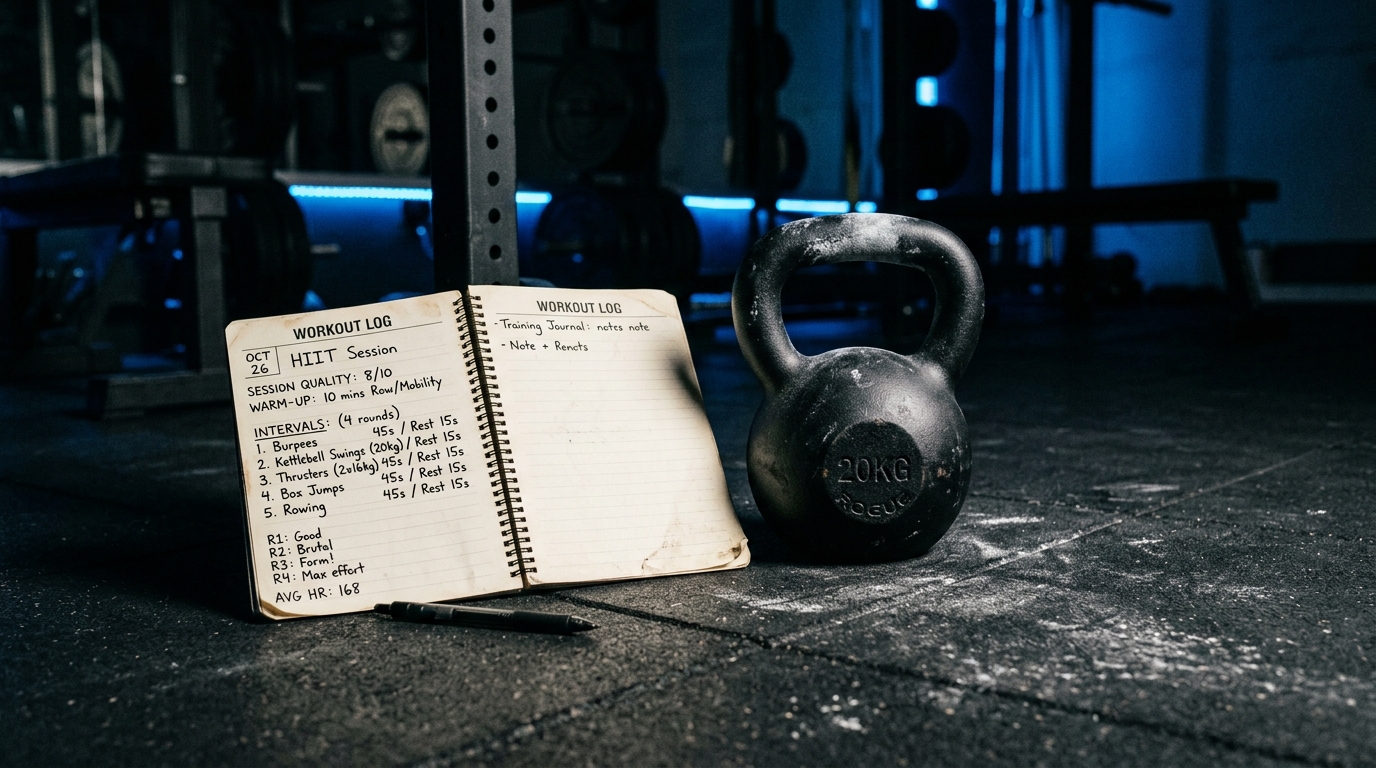
Consider keeping brief notes after sessions where you felt locked in. What interval length were you using? What load? What was different about that day? Over time, you'll build a personal map of your flow triggers. That data is more valuable than any program you'll find online.
The timer beeps. You pick up the bell. For the next 45 seconds, nothing else exists. That's not just good training. That's the whole point.
Ready to put this into practice? FlowTimer lets you build custom interval workouts, set precise work-to-rest ratios, and train with audio cues so you can focus on your form.
Try FlowTimer Free