
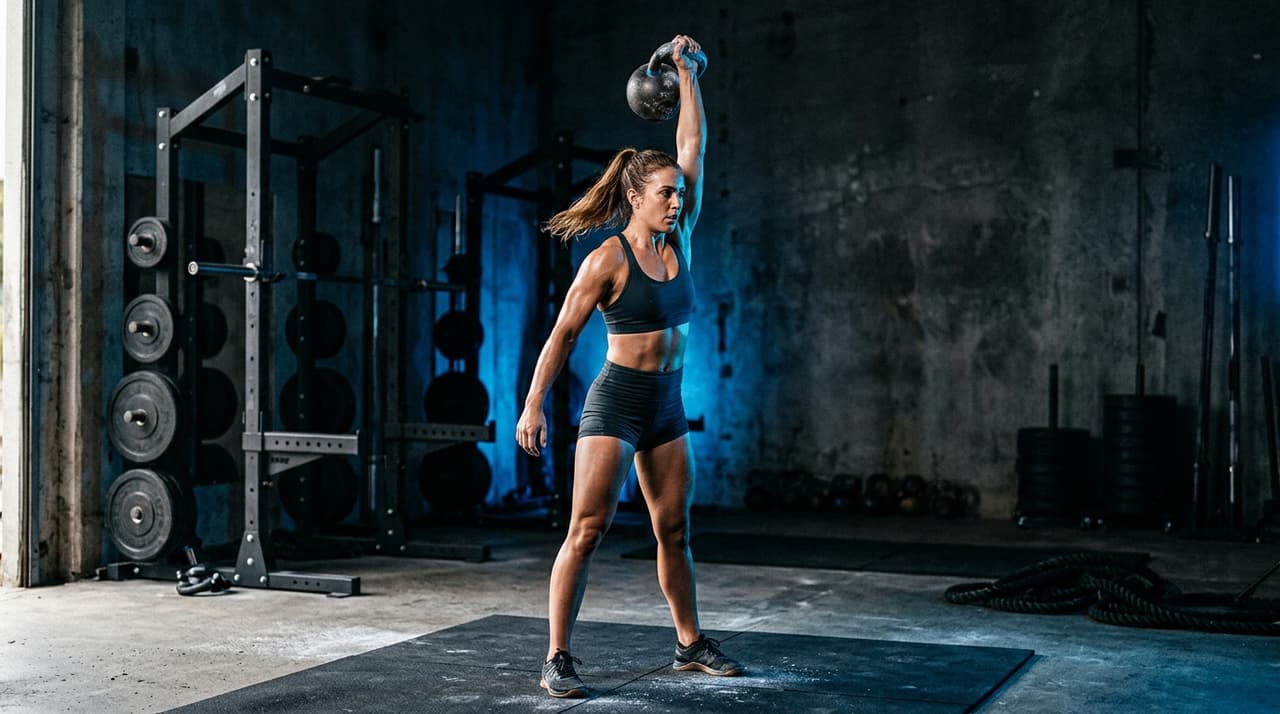
Kettlebell snatch technique for high-rep sets
How to build a kettlebell snatch that survives 100-rep sets without shredding your hands or your shoulders. Technique, pacing, and grip strategy.
The kettlebell snatch is one of those movements that looks simple until you try to do it 100 times in ten minutes. Then it becomes an honest conversation about your grip, your hip drive, and your ability to lie to yourself about how tired you are.
I want to talk specifically about the high-rep snatch, sets of 50, 100, or the classic 10-minute snatch test. The technique that works for a heavy single is not the technique that survives volume. This is where a lot of people get injured or just gas out at rep 40 and stare at the ceiling.
What actually changes at high reps
A one-rep max snatch is a power expression. You can muscle it, grip hard, over-recruit the shoulder, and get away with inefficiency because you only pay for it once. High-rep snatches punish everything you'd get away with once.
The three failure points, in the order they usually show up:
- Grip fatigue in the forearm flexors and thumb web
- Skin tearing at the base of the fingers
- Cardiovascular ceiling (heart rate parked at max, breathing falls apart)
Shoulder pain shows up too, but usually as a symptom of one of the above. When your grip fails, you catch the bell harder. When your breathing falls apart, your bracing goes with it and the bell yanks your shoulder at the top.
A 2019 analysis of the AKC-style snatch by Ross et al. found that heart rate during a 10-minute snatch test typically sits at 90-95% of max for the entire duration, with lactate values comparable to a 400m sprint sustained for ten times as long. You are not going to muscle your way through that. You need mechanical efficiency.
The technique changes that matter
Loose hand, hooked fingers
The single biggest change from a low-rep snatch to a high-rep snatch is your grip. On a max effort, you crush the handle. On rep 60 of a 100-rep set, if you're still crushing, you already lost.
Hook the handle with your fingers. Thumb wraps loosely. The bell hangs from your fingers on the downswing, not clamped in your palm. Your palm should feel almost open at the bottom of the swing. This does two things: it reduces forearm burn dramatically, and it keeps the handle from grinding a callus off your palm during the hand-insertion phase.
Punch through, don't catch
At the top, the classic cue is "punch the hand through the handle" so the bell rotates around your fist instead of flipping over and slamming your wrist. Everyone knows this. Very few people do it under fatigue.
The drift I see: as reps climb, athletes start letting the bell flip over the top. It slams the back of the wrist, they compensate by gripping harder to control the flip, forearm fatigue accelerates, form collapses further. The corrective is to keep the bell close to your body on the way up and time the punch earlier, before the bell reaches shoulder height, not at the top.
Hip snap, not arm pull
If your triceps or delts are burning before your glutes and hamstrings, you're pulling the bell up with your arm. High-rep snatches are a hip drive with an arm along for the ride. The arm's only job is to guide the bell's path close to the body and punch through at the top. If you cued yourself to keep the arm relaxed the whole way up, you'd be about right.
If your swing mechanics aren't dialed in, the snatch will magnify every flaw. Fix the swing first.
Pacing a high-rep set
Here is the pacing math that saved my snatch test. The 10-minute test at 100 reps requires 10 reps per minute. That sounds easy. It is not, because if you start at 15 reps per minute (which feels sustainable in minute one), you will hit a wall at minute five and finish at 6 reps per minute breathing through a straw.
Even pacing wins. Set an EMOM-style structure where you do 10 reps then rest the remainder of the minute. In early minutes you'll get 25-35 seconds of rest. By minute eight you might get 5 seconds. But you never blow up.
Hand switches: switch hands every 5 reps in the early minutes, every 3 reps once fatigue climbs. This lets grip recover in micro-doses and it keeps hand skin from getting hammered on one side.
Breathing: match your breath to the rep. Sharp exhale on the punch-through at the top, inhale on the descent. If you find yourself holding breath between reps or gasping at the top, your pacing is already too aggressive. Full details on breathing under load here.
If you're not already using a timer for this, you should be. Trying to count reps and watch a wall clock while your heart rate is at 190 is a losing game. Set up your intervals in FlowTimer with a 10-minute countdown and rep-block audio cues so you can just work.
Skin management (nobody's favorite topic)
If your hands tear at rep 70, the workout is over regardless of how strong your grip is. Skin is the actual limiting factor for most people learning high-rep snatches.
Things that help:
- File calluses flat every week. Raised calluses are what tear.
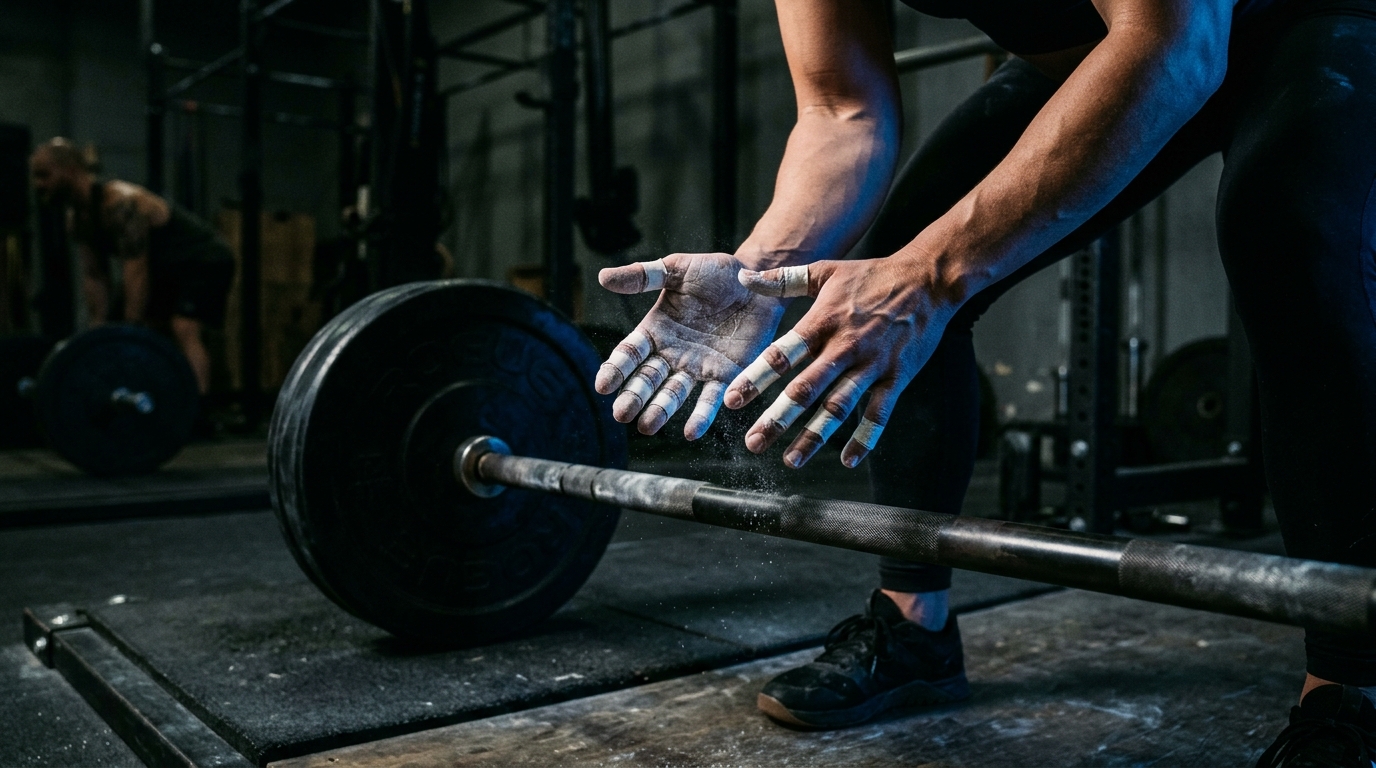
- Chalk lightly. Heavy chalk increases friction, which increases tearing.
- The bell should rotate around your hand, not drag across your palm. If you feel the handle sliding across your palm on the flip, your punch-through timing is late.
- Rest days between high-volume snatch sessions. Skin needs 48-72 hours to reinforce.
A build-up progression
Don't test 100 reps until you've built the capacity. Here's a rough progression that has worked:
Start with 10 sets of 5 per hand with 60 seconds rest, using a bell 4kg lighter than your test bell. Do that for two weeks. Then move to 5 minutes continuous, switching every 10 reps, same lighter bell. Another two weeks.
Week 5-6, switch to EMOM 10 minutes, 8 reps per minute, now with a bell 2kg lighter than test weight. Week 7-8, same EMOM format but 10 reps per minute with your actual test bell. Week 9, test.
The men's standard for the 10-minute test is 24kg, women's is 16kg, but scale to whatever bell you own. The protocol works the same.
What high-rep snatches actually train
These sets build a very specific quality: repeated power output when your heart rate is pinned at the top. They're not the best tool for max strength, not the best for hypertrophy, not the best for pure aerobic base. They sit in a narrow, useful window between anaerobic capacity and glycolytic endurance, and they do it while demanding technical precision under fatigue.
That's why they're brutal and that's why they're worth practicing. Not many exercises punish sloppy technique and reward economy the way a long snatch set does.
Start lighter than your ego wants. Let the technique do the work, not your death grip on the handle.
Ready to put this into practice? FlowTimer lets you build custom interval workouts, set precise work-to-rest ratios, and train with audio cues so you can focus on your form.
Try FlowTimer Free

