Mental cues that actually fix your kettlebell form
The right mental cue can fix form faster than a dozen coaching corrections. Here's which cues work, why, and how to use them.
You can watch a hundred swing tutorials and still round your back on rep six. Not because you don't know better, but because knowing and doing are wired into different parts of the brain. This is where cues come in. The short phrases you tell yourself mid-rep are doing more work than most lifters realize, and picking the wrong ones can quietly sabotage months of practice.
I want to walk through what the research says about internal versus external cues, then give you a practical set for the lifts kettlebell and mace athletes actually do. Some of this will feel counterintuitive.
Internal vs external: the distinction that matters
Gabriele Wulf's research on attentional focus, spanning more than two decades and dozens of studies, keeps landing on the same finding. When you focus on the movement of your body (internal focus), you perform worse than when you focus on the effect of your movement on something outside your body (external focus).
A 2013 review in the International Review of Sport and Exercise Psychology looked at studies across throwing, jumping, balance, and lifting tasks. External focus produced better outcomes in the vast majority. Not by a little. In some studies, jump height improved 5-10% just by changing the cue from "extend your hips explosively" to "jump toward the ceiling."
The mechanism is what's called the constrained action hypothesis. When you consciously direct muscles, you interfere with the automatic motor programs your nervous system already has. It's like trying to walk while thinking about which muscle fires next. You get worse at walking.
Why kettlebell coaching often gets this wrong
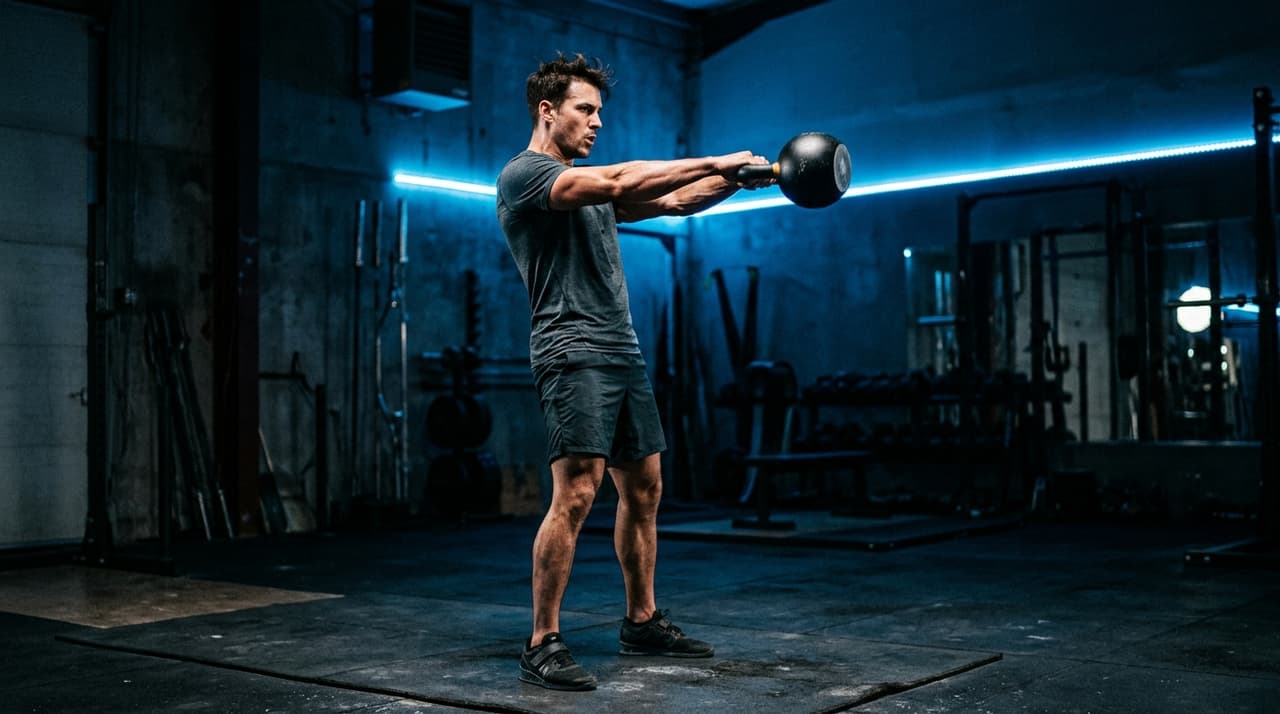
Open any kettlebell manual and count the internal cues. Squeeze your glutes. Pack the shoulder. Brace the core. Fire the lats. These aren't wrong exactly, they're describing what should happen. But telling yourself to "squeeze the glutes" during a swing is often less effective than "punch the bell forward" or "stand up tall fast."
The body already knows how to squeeze glutes to stand up. It's done that motion since you were a toddler. What it needs is a target, an effect, a thing to accomplish. Give it that, and the muscle recruitment sorts itself out.
Most kettlebell instruction treats you like a student who needs to memorize anatomy. But when you're actually lifting, you need to move like an athlete, not recite a checklist. I've watched people get noticeably worse when they start thinking too hard about which muscles they're "supposed" to feel.
A working set of external cues
These are cues I've either used or watched work reliably. Try them, discard what doesn't fit.
| Lift | Internal cue (avoid) | External cue (try) |
|---|---|---|
| Swing | Squeeze glutes at top | Float the bell to chest |
| Swing | Hinge at the hips | Push the wall behind you with your butt |
| Clean | Guide the bell around | Zip up a jacket to your collarbone |
| Press | Pack the shoulder | Push the ceiling away |
| Snatch | Punch through | Stab the sky |
| Goblet squat | Sit down between your heels | Spread the floor apart with your feet |
| Get-up (roll to elbow) | Engage your obliques | Reach for the far wall with the bell |
| Mace 360 | Control the descent | Trace a circle behind your head |
None of these are magic phrases. What makes them work is that they point at something outside the body. The bell, the ceiling, the wall, the floor. Your motor system is very good at solving "make the bell do this" problems.
When internal cues do help
Wulf's research isn't absolute. There are moments an internal cue beats an external one, mostly during rehab, or when you're first learning to feel a muscle you've been ignoring. If you can't find your glutes at all, a few sets of glute bridges with the cue "squeeze until it cramps" will teach you where they live. Once you know, you retire that cue.
Beginners also seem to benefit from more internal cues early on, though even here the effect is small. As soon as the basic pattern is present, switch external. Advanced lifters lose ground fast when they revert to internal focus. You've been swinging for two years and suddenly you're thinking about your lats? You'll probably get slower and less powerful, not better.
How to test a cue on yourself
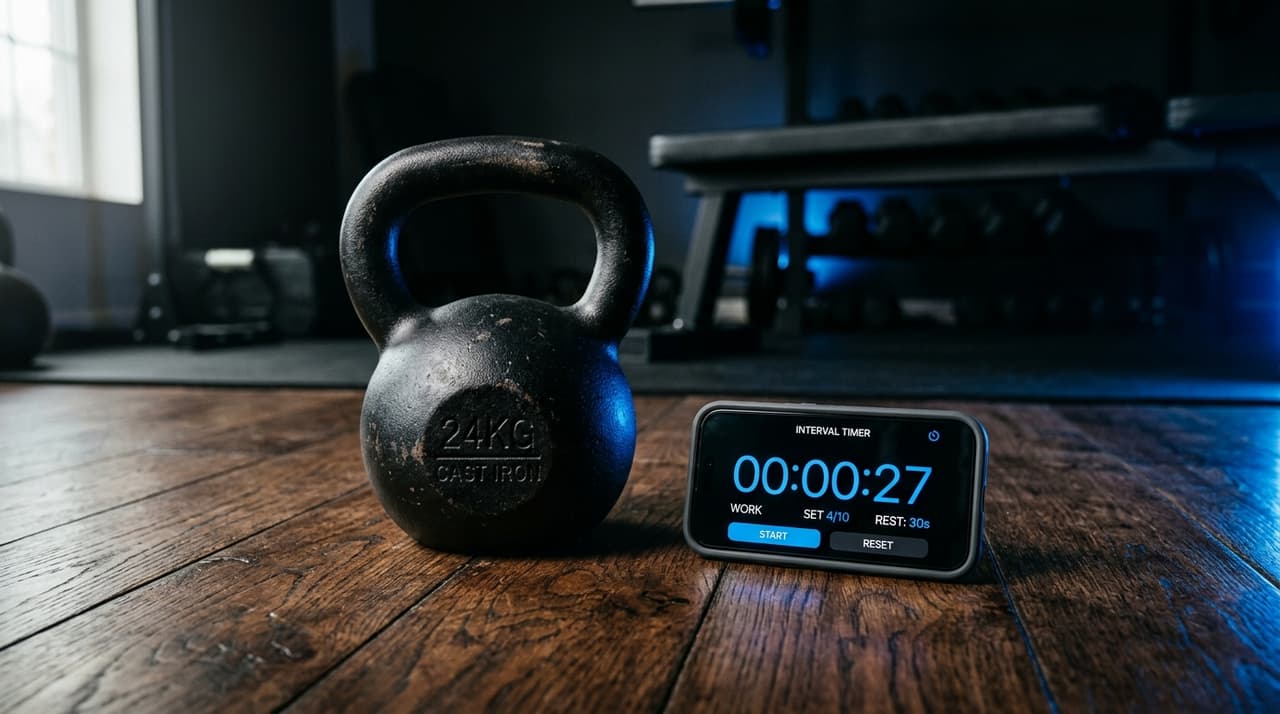
Run a simple A/B. Pick a lift you can measure, swings for 30 seconds, or a snatch set to a strict tempo. Do one round with your usual internal cue. Rest fully. Do another with an external cue targeting the same fault. Compare feel, output, and if you can, video.
A timer helps here because it removes one variable. When your work bouts are identical in duration, the only thing changing is the cue. FlowTimer is what I use for this kind of self-experiment, running matched intervals so I can actually tell if a cue is doing anything or if I'm just fooling myself.
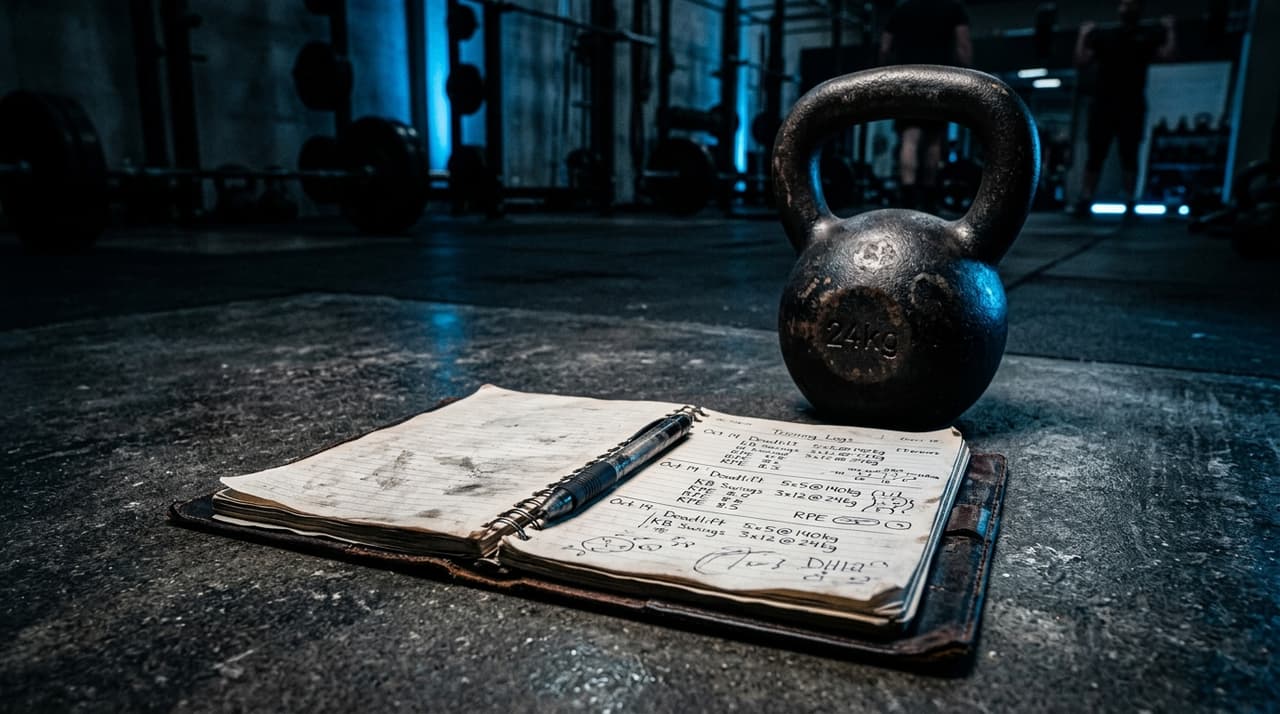
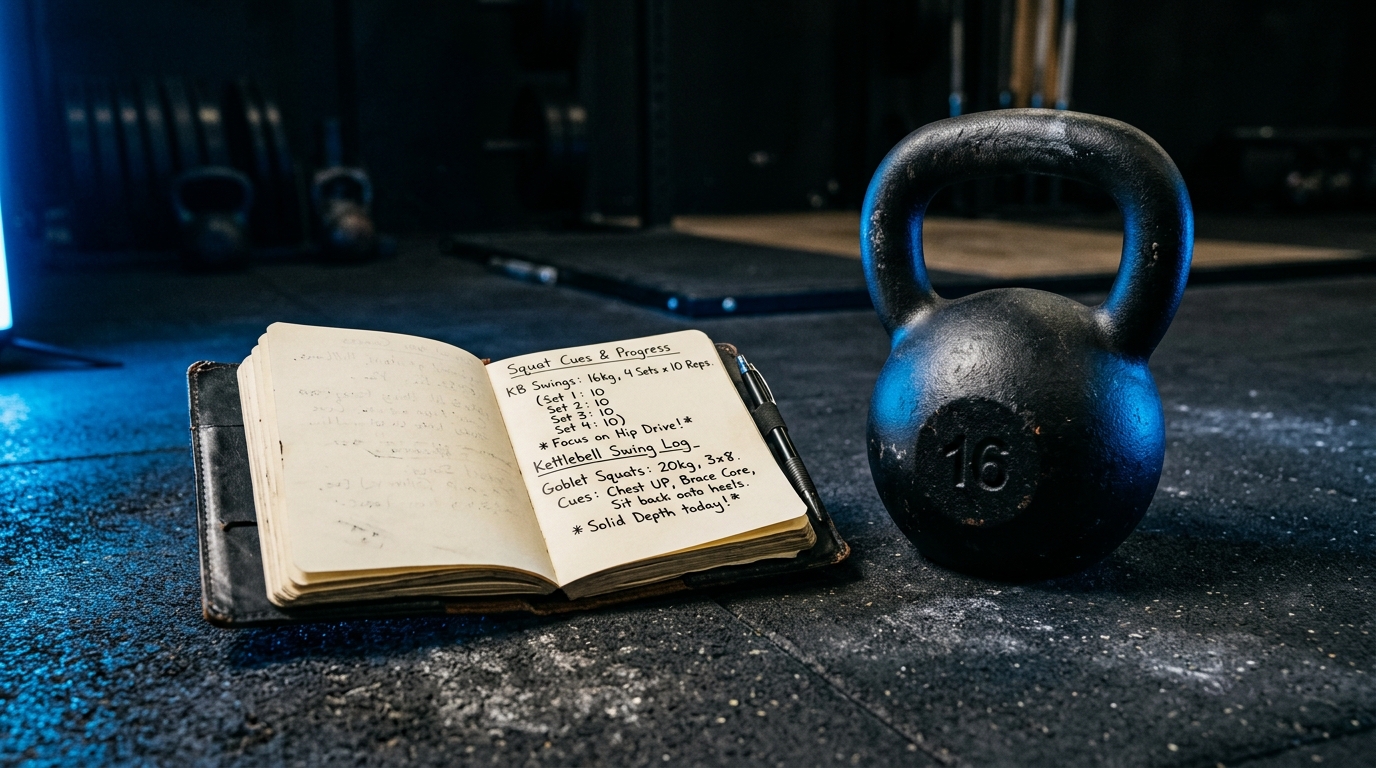
Write the cue down if it works. This sounds obvious. Almost no one does it. A good cue you found on a Tuesday and forgot by Friday is worthless.
One cue per set
The biggest mistake, once people buy into cueing, is stacking. They try to think about four things at once and end up moving like a marionette. Pick one cue per set. If your form has two problems, address the one that limits you most, and let the other wait.
Motor learning happens in the background. You don't need to consciously fix everything. Feed your nervous system one clear signal, repeatedly, and get out of its way.
The lifters I've watched improve fastest aren't the ones with the deepest anatomy knowledge. They're the ones who found two or three cues that work for their body, wrote them down, and stopped thinking about the rest. Your form gets better when your brain gets quieter. Cues, done right, are how you quiet it.
Ready to put this into practice? FlowTimer lets you build custom interval workouts, set precise work-to-rest ratios, and train with audio cues so you can focus on your form.
Try FlowTimer Free